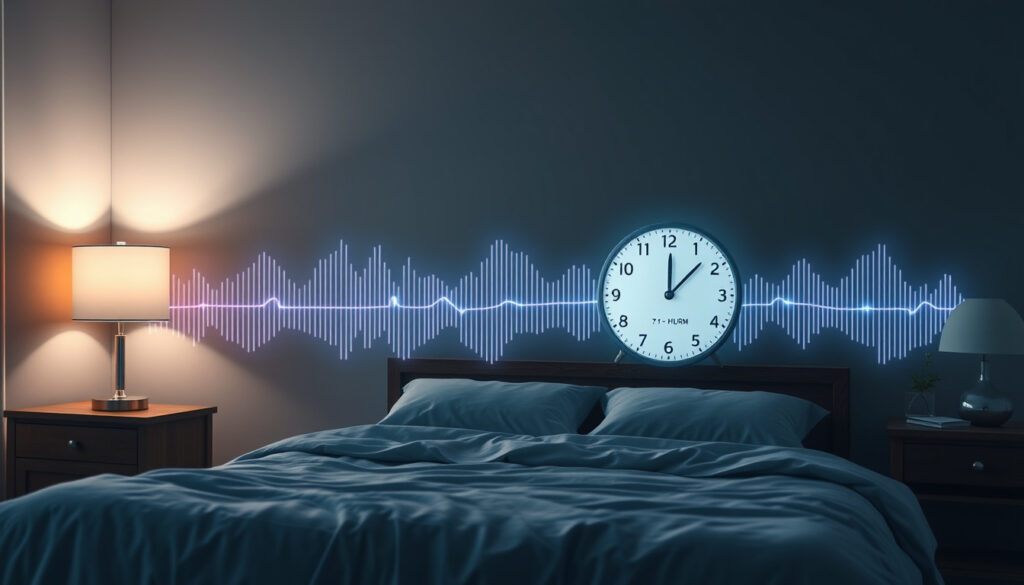
What Is REM Sleep? Stages, Benefits & How Much You Need
You’ve probably heard that sleep isn’t just “off time” for your brain — it’s an active, layered process where different stages do different work. One of the most striking of those stages is REM, where your eyes dart behind closed lids and your mind conjures vivid, sometimes bizarre narratives.
Typical Duration: 20-25% of total sleep ·
Key Feature: Rapid eye movements ·
Associated With: Vivid dreaming ·
Brain Activity: Similar to wakefulness ·
Occurs In: Cycles throughout night
Quick snapshot
- REM accounts for 20–25% of adult sleep, occurring 70–90 minutes after you fall asleep (FoundMyFitness)
- Your brain fires in patterns similar to wakefulness during REM — theta (4–7 Hz) and beta (15–25 Hz) waves dominate (PubMed)
- REM is essential for consolidating procedural memories and emotional processing (Harvard Health)
- Why dreams themselves exist — whether they serve a purpose or are a byproduct of neural housekeeping
- How much dream recall correlates with sleep quality or memory function
- Deep sleep dominates the first half of the night; REM periods lengthen in the second half, stretching up to 60 minutes (Texas Health)
- Each full sleep cycle takes about one hour on average (NCBI Bookshelf)
- Understanding why REM is so sensitive to alcohol, stress, and aging — and what you can actually do about it
Key attributes of REM sleep, drawn from sleep research literature, are summarized below.
| Attribute | Value | Source |
|---|---|---|
| Definition | Rapid eye movement sleep stage | FoundMyFitness |
| Discovery | Identified in 1953 via EEG studies | NCBI Bookshelf |
| Prevalence | Observed in all mammals and birds | APA |
| Duration per cycle | Increases throughout the night, up to 60 minutes | Texas Health |
| REM onset timing | 70–90 minutes after falling asleep | FoundMyFitness |
| Brain wave types | Theta (4–7 Hz), beta (15–25 Hz) | PubMed |
What is REM sleep vs deep sleep?
Not all sleep stages work the same way, and conflating REM with deep sleep obscures what each actually does for your body and mind. Deep sleep, also called slow-wave sleep (SWS), is characterized by delta waves oscillating at 1–4 Hz and concentrates heavily in the first half of the night (Psychology Today). REM, by contrast, generates brain activity that looks almost identical to when you’re awake — your neurons fire in theta (4–7 Hz) and beta (15–25 Hz) ranges, and your eyes sweep rapidly behind closed lids.
The structural contrast is stark: deep sleep shows a coordinated, slow wave rhythm generated from your frontal lobe, while REM displays what researchers call “desynchronized” activity — different brain regions firing independently. This reflects their different jobs. Deep sleep pushes physical repair: growth hormone releases, bone and muscle tissue rebuilds, your immune system recalibrates (Welltory). REM handles the cognitive and emotional load.
Key differences in brain activity
- Deep sleep (SWS): delta waves at 1–4 Hz, coordinated slow oscillations at 1–1.25 Hz — a synchronized sweep from frontal to posterior brain regions
- REM: theta (4–7 Hz) and beta (15–25 Hz) waves that rise and fall independently across brain areas, similar to waking patterns
- The hippocampus — temporary memory storage — remains active during REM, processing emotional and procedural data, while during deep sleep it hands off declarative memories to the neocortex (Yale School of Medicine)
Physical characteristics
During REM, your body enacts a curious safeguard: muscle paralysis (atonia) prevents you from acting out your dreams. Heart rate and breathing become irregular, rising and falling in sync with dream content (Harvard Health). In deep sleep, by contrast, physiological markers settle to their lowest baseline — blood pressure drops, heart rate slows to a steady minimum.
The implication is that these stages are not interchangeable backups — cutting short either one creates specific deficits that other stages cannot fully compensate for.
Deep sleep is your body’s maintenance window and REM is your brain’s editing suite — they run on separate tracks, and both are non-negotiable for different reasons.
Is REM sleep good or bad?
This is a question worth answering precisely, because the answer is nuanced: REM is neither inherently “good” nor “bad” — it’s indispensable for certain functions, but too much or too little creates distinct problems.
Benefits for brain health
Harvard Health identifies REM as the single most important sleep stage for memory consolidation — the process of taking new information and weaving it into long-term storage (Harvard Health). It works by replenishing neurotransmitters in neural networks critical for learning and problem-solving (APA), and by activating the amygdala — your brain’s emotional processing hub — to help you process fear, aggression, and social complexity.
Research from PubMed shows that theta (4–7 Hz) and beta (15–25 Hz) power in REM positively predicts memory transformation: higher REM quality correlates with reducing item-level memory details and enhancing category-level abstractions (PubMed). In plain terms, REM helps you generalize — it extracts patterns from specific experiences and turns them into transferable knowledge.
A higher REM-to-SWS ratio doesn’t just help you remember more — it helps you forget the irrelevant details and keep the useful principles. That’s the cognitive trade-off.
Risks of too little REM
Sleep deprivation that specifically suppresses REM impairs task memory retention for up to three days after the deprivation event (Harvard Health). Insufficient REM also shows up in emotional regulation: people with chronically reduced REM report heightened anxiety, irritability, and difficulty processing social cues (FoundMyFitness).
One quirk: antidepressants that inhibit REM via serotonin manipulation don’t always disrupt memory function, suggesting that the brain has backup routes for consolidating what matters (APA). But this shouldn’t be read as license to sacrifice REM — the emotional processing benefits still appear compromised.
What this means is that optimizing your REM isn’t just about sleeping longer — it’s about protecting the right architecture of sleep cycles.
How many hours of REM sleep do I need?
For adults, the standard recommendation is 1.5–2 hours of REM per night, representing roughly 20–25% of total sleep time (Texas Health). That’s the target — but “how much REM you actually get” is complicated because it varies by age, total sleep duration, and where you are in the night.
Recommended amounts by age
- Infants and newborns: REM comprises up to 50% of total sleep, critical for rapid brain development
- Children (1–12 years): REM stays elevated, around 25–30%, gradually declining toward adult levels
- Teenagers: Still slightly elevated REM needs (~25%), but real-world sleep restriction often cuts it short
- Adults: 20–25% of total sleep, with increasing difficulty achieving full REM after age 50
Factors affecting REM duration
Several variables influence how much REM you capture:
- Total sleep time: REM is “last in line” — if you shortchange sleep, you disproportionately lose REM cycles at the end of the night
- Alcohol and sedatives: These suppress REM by 10–30% and fragment the later cycles where REM dominates (FoundMyFitness)
- Age: Deep sleep percentage (25% in young adults) drops to roughly 10% by age 65, shifting the architecture away from both deep and REM in favor of lighter stages
The pattern is clear: your sleep architecture shifts across the lifespan, and the later-in-life you get, the more intentional you must be about protecting total sleep time.
You cannot meaningfully “catch up” on REM by sleeping longer on weekends. The brain’s homeostatic pressure resets each night, and oversleeping triggers lighter-stage recovery rather than REM-specific compensation.
What does REM sleep do?
Beyond the headline — yes, it enables dreaming — REM performs several distinct biological functions that have been documented across decades of sleep research.
Role in dreaming
REM is the primary stage for vivid, narrative dreams. Your brain generates complex visual and emotional scenarios while your body is immobilized by atonia. But dreaming isn’t exclusive to REM — you can have dream-like experiences in deep sleep or stage 2 — they’re just shorter, more fragmentary, and less emotionally charged (Psychology Today).
Functions in cognition
The list of cognitive functions tied to REM is long and well-supported:
- Memory consolidation: REM integrates new information into long-term storage, particularly procedural and emotional memories (Harvard Health)
- Emotional processing: Dr. Matthew Walker calls REM “emotional first aid” — it helps the amygdala process difficult experiences without overwhelming the prefrontal cortex (FoundMyFitness)
- Creativity enhancement: Processing memories during sleep supports creative connections — a reason researchers link REM to problem-solving gains (PMC)
- Motor skill storage: REM consolidates motor cortex short-term memories to the temporal lobe for long-term retention (APA)
The catch is that these functions are sequential and time-dependent — missing REM in the early cycles doesn’t mean you can simply extend REM later without consequence.
Is REM sleep when you dream?
Yes — but with important nuance. REM is the sleep stage most reliably associated with vivid, storylike dreams, but dreaming doesn’t exclusively occur in REM.
Dream characteristics in REM
- Extended narrative arcs (5–30+ minutes of continuous dream content)
- Visual imagery, emotional intensity, and narrative logic similar to waking experience
- Easier recall upon waking — your hippocampus remains active, encoding the experience
Dreaming in other stages
Non-REM dreams tend to be shorter, more thought-like, and less visually vivid. Deep sleep produces minimal dream content. Stage 2 can produce brief, fragmentary dreams but rarely the elaborate narratives of REM. The key difference is hippocampal activity: REM keeps the hippocampus online, allowing story construction, while deep sleep largely silences it.
The open question — why dreams exist at all — remains genuinely unresolved. Some researchers argue dreams are an epiphenomenon of neural housekeeping; others propose they serve threat-simulation, memory integration, or emotional regulation functions. What is confirmed is that dream recall varies widely and doesn’t reliably correlate with sleep quality.
The implication is that how vividly you dream is not a reliable proxy for how well you’re sleeping — the brain may be working even when the narrative is muted.
Upsides
- Essential for emotional regulation and processing difficult experiences
- Consolidates procedural and spatial memories better than other stages
- Associated with enhanced creativity and problem-solving
- Replenishes neurotransmitters for next-day learning capacity
- Salvages forgotten memories by integrating them into accessible networks
Downsides
- Fragmented by alcohol, medications, and stress — losing it impairs next-day cognition
- Reduced REM linked to anxiety, irritability, and social processing difficulties
- Longer REM periods late in the night make you harder to wake and groggier if cut short
- Aging progressively reduces both total REM time and its quality
Three sleep stages, each doing distinct work. Here’s how they compare across the metrics that matter most.
The comparison reveals a fundamental architecture: deep sleep handles preservation and repair, REM handles integration and adaptation, and light sleep buffers the transitions.
| Attribute | REM | Deep (SWS) | Light (Stage 2) |
|---|---|---|---|
| Brain activity | High, desynchronized (theta + beta) | Coordinated slow waves (delta) | Moderate, mixed spindles |
| Primary function | Emotional memory, creativity, procedural learning | Physical repair, declarative memory transfer | Motor memory commitment, energy conservation |
| Dominant timing | Later half of night, extends toward morning | First half of night | Throughout, transitions between stages |
| Percentage of adult sleep | 20–25% | 25% | 45–50% |
| Key risk if deficient | Anxiety, emotional dysregulation, creativity decline | Physical exhaustion, glymphatic backup, Alzheimer’s risk | Poor motor skill retention, daytime fatigue |
Of these phases, the one that is most important for memory is REM.
— Harvard Health (Medical Publication)
REM sleep we found serves all manner of different functions, one of which is emotional first aid.
— Dr. Matthew Walker, Neuroscientist (FoundMyFitness)
While all types of sleep appear to be essential, deep wave sleep could be considered the most essential.
— Psychology Today (Expert Publication)
Related reading: Best Mattress for Side Sleepers 2026: Top Tested Picks · Erikson’s Stages of Development – 8 Stages Explained with Ages and Examples
Experts note that the REM sleep cycle typically recurs every 90 minutes, building in intensity through the night to support memory and mood.
Frequently asked questions
Can you sleep without REM sleep?
You can sleep without remembering your dreams — that happens when REM periods are short or fragmented. But going entirely without REM for extended periods is rare and typically indicates a serious sleep disorder. Your brain will prioritize REM recovery even at the expense of other stages once the deficit is significant enough.
Is 30 minutes REM sleep enough?
30 minutes of REM is below the recommended 1.5–2 hours for adults. If that’s your nightly total, you’re likely experiencing deficits in emotional processing and memory consolidation. This often happens when total sleep is shortened — REM is the last stage to get its full allocation.
Is 40 minutes of REM sleep good?
40 minutes is still below target for most adults. While the exact number varies by individual and total sleep duration, falling consistently short of 90 minutes of REM can manifest as reduced emotional resilience, poorer creative problem-solving, and difficulty with procedural learning tasks.
What is REM sleep in babies?
Infants spend up to 50% of their total sleep time in REM — roughly double the adult percentage. This makes biological sense: REM’s job includes wiring the brain’s emotional and procedural circuits, which in early development means building foundational neural architecture at extraordinary speed.
Is REM sleep deep sleep?
No. REM and deep sleep (slow-wave sleep) are distinct stages with different brain wave patterns, physiological functions, and dominant timing. Deep sleep features delta waves (1–4 Hz) and focuses on physical repair; REM generates theta and beta waves and focuses on emotional and cognitive consolidation.
What is light sleep?
Light sleep (stages 1 and 2) is the transition zone between wakefulness and deeper stages. Stage 1 is brief — a few minutes of drifting — while stage 2 comprises 45–50% of adult sleep and involves sleep spindles that help commit motor skills to memory. You can be awakened easily from light sleep, and its fragmentation by noise or movement reduces the stability of subsequent deeper stages.
What is deep sleep?
Deep sleep, also called slow-wave sleep (SWS) or stage 3 NREM, comprises about 25% of adult sleep. It’s characterized by delta waves (1–4 Hz) and is when your body does the heaviest repair work — growth hormone releases, bone and muscle tissue regenerates, immune function recalibrates. Deep sleep also facilitates declarative memory transfer from the hippocampus to the neocortex, and the glymphatic system uses this window to clear beta-amyloid plaques associated with Alzheimer’s disease.
More related posts
 6 Inches to cm – Exact Conversion & Common Mistakes
 Symptoms of Breast Cancer: Early Signs & Warnings
 Who Moved My Cheese: Summary, Key Lessons & Moral
 Ivermectin Dosage for Humans: Dose by Weight & How to Take
 Morocco National Football Team: History, Players, Ranking
 UPS Data Entry Remote Jobs: Salary, Day & Avoiding Scams
 Amazon Customer Service Chat – How to Access 24/7 Support