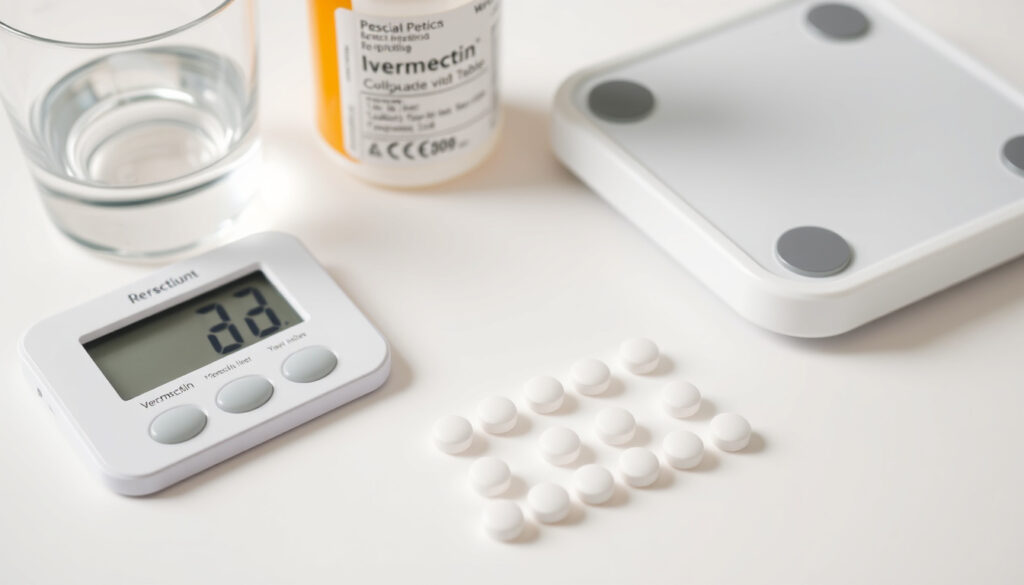
Ivermectin Dosage for Humans: Dose by Weight & How to Take
You’ve probably heard a lot about ivermectin over the past few years, but sorting out the real dosage guidelines from the noise isn’t always easy. For approved uses in humans — like strongyloidiasis and onchocerciasis — the dose is calculated by body weight and taken as a single oral tablet on an empty stomach.
Standard oral dose: 150 mcg per kg body weight ·
Common tablet strength: 3 mg ·
Typical regimen: Single dose ·
Empty stomach timing: At least 1 hour before or 2 hours after a meal ·
Repeat treatment interval: Every 3 to 12 months depending on condition
Quick snapshot
- Standard dose for strongyloidiasis: 200 mcg/kg single oral dose (Healthline)
- Standard dose for onchocerciasis: 150 mcg/kg single oral dose (Mayo Clinic)
- Must be taken on empty stomach with water (FDA Stromectol Label)
- Optimal dose for off-label uses remains unestablished
- Long-term effects of repeated dosing not fully studied
- Interaction with common medications not well documented
- 1987: Ivermectin approved for human use (Medical News Today)
- 2015: Nobel Prize awarded for its discovery (Medical News Today)
- Continued monitoring of safety for mass drug administration (Medical News Today)
- Research into additional parasitic indications (Medical News Today)
Four key facts about ivermectin, one pattern: the drug’s dosage and approval history are tightly linked to public health programs.
| Attribute | Value |
|---|---|
| Approved by FDA | Yes, for certain parasitic infections |
| Year introduced | 1987 |
| Nobel Prize status | 2015 Nobel Prize in Physiology or Medicine for its discovery |
| Global distribution | Over 1 billion treatments donated by Merck |
Ivermectin dosage for humans by weight
How to calculate ivermectin dose for your weight
- For strongyloidiasis: 200 mcg/kg as a single dose. For a person weighing 70 kg, that equals 14,000 mcg (14 mg) — typically 5 tablets of 3 mg each, though the exact number depends on available tablet strengths. FDA Stromectol Label (U.S. regulatory authority) confirms this guideline.
- For onchocerciasis: 150 mcg/kg as a single dose. A 70 kg person would take 10,500 mcg (10.5 mg) — usually 3 or 4 tablets of 3 mg. Mayo Clinic (clinical reference) provides this standard.
What is the dose for a 70 kg adult
A 70 kg adult taking ivermectin for strongyloidiasis would generally receive 14 mg (14,000 mcg), which equals 5 tablets of 3 mg. For onchocerciasis, the same adult would receive 10.5 mg (10,500 mcg), about 3 to 4 tablets. These figures come from the FDA Stromectol Label (U.S. regulatory authority). Weight-band dosing tables from Medical News Today (health publisher) show that for strongyloidiasis, a person weighing 66-79 kg receives 5 tablets of 3 mg, and for ≥80 kg the dose is individually calculated at 200 mcg/kg.
Ivermectin 12mg dosage for humans
How many 3 mg tablets equal 12 mg
Since standard ivermectin tablets are 3 mg each, a 12 mg dose requires 4 tablets. This is a common total for a person weighing about 60 kg taking the onchocerciasis dose (150 mcg/kg × 60 kg = 9,000 mcg = 9 mg; 12 mg would be 200 mcg/kg for 60 kg). The number of tablets is simply the total milligrams divided by 3. GoodRx (prescription price comparison service) notes that 3 mg is the most common tablet strength in the U.S.
Is 12 mg a standard dose for any condition
12 mg does not appear as a standard fixed dose in official prescribing information. Instead, the dose is individualized by weight. For strongyloidiasis, a 12 mg dose (4 tablets) would correspond to a person weighing 60 kg (12,000 mcg ÷ 200 mcg/kg = 60 kg). For onchocerciasis, 12 mg at 150 mcg/kg would be for an 80 kg person. Always calculate by weight rather than aiming for a round number like 12 mg, as advised by Mayo Clinic.
Fixed milligram doses like 12 mg are convenient but can lead to under- or overdosing. A person weighing 50 kg would get 200 mcg/kg (10 mg) for strongyloidiasis, but 12 mg would be 240 mcg/kg — above the standard range. Always calculate by weight.
The implication: a fixed 12 mg dose is safe only for a narrow weight range, making individual calculation the safer approach.
Liquid ivermectin dosage for humans
How to measure liquid ivermectin in mL
Liquid ivermectin formulations are generally designed for veterinary use and are not standardized for human oral dosing. The Medical News Today (health publisher) notes that human ivermectin is available as 3 mg tablets, not as an oral solution in the U.S. Some compounding pharmacies may produce an oral suspension, but concentrations vary. If a liquid human formulation is prescribed, the dose in mL is calculated as: (weight in kg × mcg per kg) ÷ concentration in mcg/mL.
Liquid ivermectin dosage for humans in mL
Because no standard human liquid ivermectin exists in the U.S., any use of liquid forms should be under direct medical supervision with a prescription from a compounding pharmacy. The FDA label only describes tablet administration. Using veterinary-grade liquid ivermectin in humans is strongly cautioned against due to concentration differences and excipients not safe for human consumption. Healthline (medical publisher) advises against using animal formulations.
Liquid ivermectin from feed stores is not the same as pharmaceutical-grade human solution. Concentration errors can cause severe neurotoxicity. Only use liquid ivermectin prescribed by a doctor and compounded by a licensed pharmacy.
The pattern: the absence of a standard human liquid formulation reinforces that only tablets should be used for approved indications.
Highest dose of ivermectin for humans
What is the maximum safe single dose
The maximum safe single dose of ivermectin is not officially defined as a fixed milligram number, but clinical practice typically stays within 150–200 mcg/kg. For a 100 kg adult, that means 20 mg (200 mcg/kg) as the upper end for strongyloidiasis. Mayo Clinic (clinical reference) states that the dose should not exceed 200 mcg/kg for any indication. Going above this range — for example, 400–600 mcg/kg used in some off-label protocols — increases the risk of neurological side effects such as ataxia, confusion, and visual disturbances.
Are there risks with high doses
Yes. High doses of ivermectin (above 200 mcg/kg) have been associated with neurotoxicity, especially in elderly or low-body-weight patients. The GoodRx (prescription price comparison service) warns that overdose can cause headache, dizziness, nausea, and in severe cases, seizures. There is no approved indication for doses exceeding 200 mcg/kg. Off-label high dosing for COVID-19 during 2020–2021 led to increased reports of overdose, and the FDA specifically advised against using veterinary formulations or high doses.
Pushing doses above 200 mcg/kg offers no proven therapeutic benefit for approved indications, only added risk. Patients considering higher doses for off-label uses face uncertain efficacy and documented harm.
What this means: sticking to the 150-200 mcg/kg range remains the only evidence-based approach for approved conditions.
How to take ivermectin
Should you take ivermectin with food
No. Ivermectin should be taken on an empty stomach — at least 1 hour before or 2 hours after a meal — with a full glass of water. This maximizes absorption and ensures the drug reaches effective levels. The FDA Stromectol Label (U.S. regulatory authority) is explicit: “Take on an empty stomach.”
What to do if you miss a dose
If you miss a dose of ivermectin, take it as soon as you remember on an empty stomach. However, if it is almost time for the next scheduled dose (in repeat treatment regimens), skip the missed dose and resume your regular schedule. Do not double the dose, as this increases the risk of side effects. Drugs.com (drug reference database) advises following your doctor’s specific instructions for missed doses.
Step-by-step guide to taking ivermectin tablets
- Calculate your dose — Determine your weight in kilograms and the condition being treated. For strongyloidiasis, multiply weight (kg) × 200 mcg; for onchocerciasis, multiply weight × 150 mcg. Divide the total mcg by 1,000 to get milligrams.
- Count your tablets — Standard tablets are 3 mg. Divide your total mg dose by 3 to find the number of tablets needed. For example, a 14 mg dose requires 5 tablets (14 ÷ 3 = 4.67, rounded to 5 tablets as per weight-band tables from Medical News Today (health publisher)).
- Take on an empty stomach — Swallow the tablets with a full glass of water at least 1 hour before or 2 hours after a meal, as per the FDA Stromectol Label (U.S. regulatory authority).
- Do not chew or crush — Swallow whole. There’s no need to split tablets; use the nearest whole tablet count based on weight bands.
- Follow up as prescribed — For most parasitic infections, a single dose is sufficient. Onchocerciasis may require repeat doses every 3–12 months, as directed by your physician.
The takeaway: following these steps ensures correct dosing and minimizes risks.
What we know and what’s uncertain
Confirmed facts
- Standard dose is 150–200 mcg/kg orally (Mayo Clinic)
- Taken on an empty stomach (FDA label)
- Single dose effective for many parasitic infections (Healthline)
- Approved by FDA for strongyloidiasis and onchocerciasis (Medical News Today)
What’s unclear
- Optimal dose for off-label uses (e.g., scabies, head lice — though some guidelines exist, consensus is lacking)
- Long-term effects of repeated dosing over years
- Interaction with common medications like warfarin or CYP3A4 substrates
- Safety in children under 15 kg — must be determined individually by a doctor
Expert perspectives
“Ivermectin is well tolerated at standard doses, but serious adverse events, particularly neurotoxicity, have been reported with high doses.”
“For mass drug administration programs, the single-dose regimen at 150–200 mcg/kg has proven safe and effective in millions of people.”
Medical News Today (health publisher)
“Ivermectin is a powerful antiparasitic, but it is not a cure-all. Patients should use it only for FDA-approved indications under medical supervision.”
Healthline (medical publisher)
Bringing it all together: the ivermectin dosage for humans is weight-based, condition-specific, and well-supported by decades of regulatory approval and mass distribution. For a patient weighing 70 kg, the right dose is either 14 mg (strongyloidiasis) or 10.5 mg (onchocerciasis) — not a one-size-fits-all. The implication is clear: skip the guesswork and calculate your precise dose based on official tables from sources like the Medsafe NZ Datasheet (New Zealand medicines regulator). For anyone prescribed ivermectin, the decision is straightforward: follow the weight-based guidelines, take it on an empty stomach, and never exceed the recommended range.
Related reading: What Is Pantoprazole Used For? Uses, Side Effects & Dosage · GLP-1 Weight Loss – Drugs, Results, Side Effects Guide
Frequently asked questions
Can I take ivermectin with other medications?
Ivermectin can interact with drugs that affect the central nervous system (e.g., benzodiazepines, barbiturates) and with medications that inhibit or induce CYP3A4 enzymes. Always inform your doctor about all medications you take, including over-the-counter drugs and supplements. Drugs.com (drug reference database) provides a drug interaction checker.
Is ivermectin safe for children?
Ivermectin is approved for children weighing 15 kg or more. For children under 15 kg, the dose must be determined individually by a doctor. The Mayo Clinic (clinical reference) states that safety and efficacy in this age group have not been established.
Does ivermectin have side effects?
Common side effects include headache, dizziness, nausea, diarrhea, and mild skin rash. More serious but rare side effects include severe skin reactions, seizures, and liver enzyme elevations. The FDA label lists precautions.
Can I drink alcohol while taking ivermectin?
Alcohol is not known to directly interact with ivermectin, but it may worsen side effects like dizziness and nausea. The Medical News Today (health publisher) advises caution and consulting a doctor.
How long does ivermectin stay in your system?
Ivermectin has an elimination half-life of approximately 18–28 hours in healthy adults, meaning it stays in your system for about 4–6 days until traces are negligible. The GoodRx (prescription price comparison service) notes that the drug is metabolized in the liver and excreted primarily in feces.
Is a prescription required for ivermectin in the US?
Yes. Ivermectin tablets are FDA-approved and available only by prescription for human use. Self-medication with veterinary ivermectin is dangerous and not recommended. The FDA has issued warnings against using animal formulations.
More related posts
 How Old Is Piper Rockelle? Age, Birthday & Latest News
 Oklahoma City Thunder vs Denver Nuggets: 2025-26 Comparison
 House of Dragon Season 3 – Release Date, Cast and Trailer
 Brigette Lundy-Paine: Gender, Name Change, Atypical Role
 Can Dogs Eat Popcorn? Vet-Approved Safety & Topping Tips
 Another Broken Egg Cafe: Location , Hi tory, Franchi e Co t
 Abby Kpop Demon Hunters – Roblox Accessory Guide
 How to Update BIOS: A Safe Step-by-Step Guide (2025)