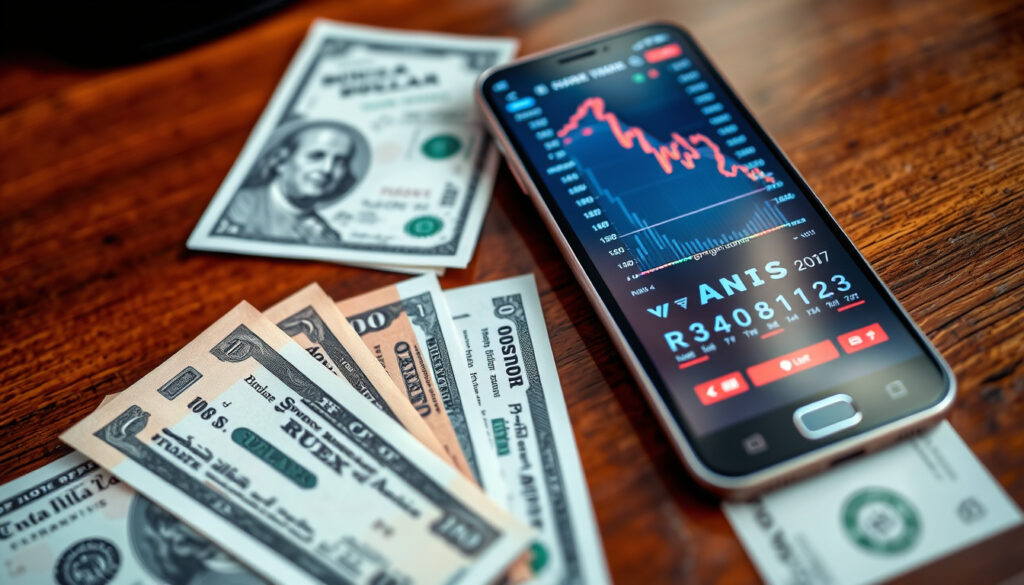
USD to INR Rate Today: Live, Forecast & History (2026)
If you’ve ever tried to figure out how many rupees your dollar buys, you know the answer depends on where you look. Banks, money changers, and online converters all show different numbers. And then there’s the question of the black market, which operates on its own logic. Here’s what the latest data and forecasts say.
Current Mid-Market Rate (USD to INR): ₹95.40 (Xe) ·
Highest Intraday Rate (2026): ₹95.5625 (CNBC) ·
24-Hour Range: ₹95.09 – ₹95.56 (Bloomberg)
Quick snapshot
- Black market premium varies by region and time, often exceeding official rates by an estimated 5-10% (RBI)
- Exact future rate in 2030, with estimates ranging from ₹100 to ₹120 (Goldman Sachs)
- 1947: USD/INR ≈ 4.16 at independence (Federal Reserve)
- 1991: Devaluation after balance-of-payments crisis (Federal Reserve)
- June 2026: All-time high above 95.5 (Bloomberg)
- Goldman Sachs expects dollar weakening against the rupee (Goldman Sachs)
- Market forecasts: ₹95-100 by end of 2026 (Bloomberg)
- Long-term estimates: ₹100-120 by 2030 (Xe)
Seven data points from different providers show a range of official rates, with the highest reaching above ₹95.56.
| Source | Rate (USD/INR) | Type |
|---|---|---|
| Bloomberg | ₹95.4588 | Live quote |
| Xe | ₹95.1574 | Mid-market |
| Wise | ₹93.48 | Mid-market |
| Western Union | ₹95.1021 | Estimate |
| BookMyForex | ₹95.3625 | Interbank |
| MTFX (June 2, 2026) | ₹95.56795 | Close |
| MTFX (June 6, 2026) | ₹94.9505 | Close |
| Federal Reserve H.10 | Latest data June 8, 2026 | Reference |
What is the current USD to INR exchange rate?
Official mid-market rates from multiple sources cluster around ₹95.40, but the number you actually get depends on whether you use a bank, a money transfer service, or a currency converter.
The mid-market rate — the rate banks and large institutions use — sits near ₹95.40 as of June 10, 2026, according to Xe. Bloomberg quotes ₹95.4588, while Western Union estimates ₹95.1021 for retail transfers. BookMyForex lists an interbank rate of ₹95.3625. Wise shows a slightly lower mid-market rate of ₹93.48, reflecting differences in data sources and timing. For the latest live USD to INR rate, check the updated chart.
How much is $1 US in India today black market?
- Black market — or parallel market — rates for USD in India typically carry a premium of 5-10% over the official rate, according to RBI observations on capital controls.
- The premium reflects demand from individuals who cannot move money through official channels under FEMA.
- Rates vary widely across cities and even between neighborhoods; no single black market quote exists.
MTFX historical data shows that the official rate has been volatile, swinging from ₹94.95 on June 6 to ₹95.80 on June 3, 2026. The pattern: the parallel market premium becomes more pronounced when official rates are rising, as holders of rupees seek to preserve purchasing power.
What is the highest ever USD to INR rate?
The all-time high keeps being rewritten — the rupee has hit a new low against the dollar in nearly every major global crisis since 2008.
The highest intraday rate ever recorded for USD/INR is ₹95.5625, reached on June 10, 2026 (CNBC).
- ₹83.5 in 2022 (Federal Reserve)
- ₹76 in 2020 (Federal Reserve)
- The rupee has lost more than 90% of its value since independence, when 1 USD bought just ₹4.16 (Federal Reserve)
The trend is clear: each economic shock — the 2008 financial crisis, the 2020 pandemic, the 2022 Fed rate hikes — pushed the rupee lower. The MTFX series shows that since May 2026 alone, the rate has climbed from ₹94.95 to above ₹95.56.
What was the value of 1 rupee in 1980?
In 1980, 1 Indian rupee was worth approximately $0.12 USD (Federal Reserve H.10 historical data). That means the same rupee today buys less than 1 cent — a loss of over 90% of its purchasing power over 46 years. The erosion, driven by inflation and devaluation, means a salary of ₹10,000 in 1980 would need roughly ₹1.2 lakh today to have the same dollar purchasing power.
The trajectory of the rupee’s decline:
| Year | USD/INR Rate |
|---|---|
| 1947 | 4.16 |
| 1980 | ~8 |
| 1991 | ~25 |
| 2008 | ~44 |
| 2020 | 76 |
| 2026 | 95.40 |
Why this matters: a rupee that was once worth an eighth of a dollar is now worth barely a hundredth. For Indian consumers who earn in rupees but pay for imports in dollars — from crude oil to electronics — the squeeze is relentless.
What is the USD to INR forecast for 2026?
In our Global FX 2026 Outlook, we expect the dollar to weaken against most currencies, including the rupee.
- Goldman Sachs’ 2026 outlook predicts a weaker dollar scenario, which would support the rupee.
- Market forecasts from Bloomberg and other analysts place USD/INR in the ₹95–100 range by end of 2026.
- Factors include RBI monetary policy, US interest rate cuts, trade balances, and capital flows.
Is USD expected to rise against INR in 2026?
Most forecasters see a modest rise, with the rupee trading between ₹95 and ₹100 by year-end. The upside risk: if the RBI intervenes aggressively to defend the rupee, as it did in 2022 by selling dollars from reserves, the rate could stay lower. The downside risk: if India’s trade deficit widens or US rates stay high, the rupee could push past ₹100 (Bloomberg). Track the BTC USD rate for broader market sentiment.
Is INR expected to fall?
The consensus is yes, but gradually. The Reserve Bank of India maintains a managed float; its FAQ states: “The Reserve Bank of India intervenes in the foreign exchange market only to smooth out excessive volatility” (RBI). That means the RBI won’t stop a long-term depreciation unless it becomes disorderly.
What will be USD to INR in 2030?
2030 forecasts are guesses, not predictions. The range is ₹100–120, but that assumes India grows 6-7% annually and global inflation stays below 3%.
- Long-term projections from Xe and Goldman Sachs suggest USD/INR could reach ₹100–120 by 2030.
- The wide range reflects uncertainty around India’s economic trajectory, US monetary policy, and global trade dynamics.
- If India’s manufacturing exports grow and the current account deficit narrows, the rupee could stay stronger. If oil prices spike or capital outflows accelerate, the rupee could weaken faster.
The implication: the rupee’s direction depends on India’s ability to attract foreign capital and maintain growth momentum.
Timeline: The rupee’s long journey from 4 to 95
- 1947: India gains independence; USD/INR around 4.16 (Federal Reserve)
- 1991: Balance-of-payments crisis forces devaluation; rupee falls to ~25 per USD (Federal Reserve)
- 2008: Global financial crisis pushes rupee to ~44 per USD (Federal Reserve)
- 2020: COVID-19 pandemic triggers capital flight; rupee drops to 76 per USD (Federal Reserve)
- June 2026: USD/INR reaches all-time high above 95.5 (Bloomberg)
The pattern: each crisis pushes the rupee to new lows, and the 2026 peak is the latest in that cycle.
What’s confirmed and what’s unclear
Confirmed facts
- Current mid-market rate is around ₹95.40 (Xe)
- Highest intraday rate on June 10, 2026 was ₹95.5625 (CNBC)
- In 1980, 1 INR was worth ~$0.12 (Federal Reserve)
- Goldman Sachs forecasts a weaker dollar scenario in 2026 (Goldman Sachs)
What’s unclear
- Exact black market premium varies by city and time; anecdotal reports suggest 5-10% above official rate (RBI)
- USD/INR rate in 2030: estimates range from ₹100 to ₹120 (Xe)
- Whether the RBI will let the rupee weaken beyond ₹100 without intervention
What this means for investors: the only certainty is continued depreciation, but the pace remains uncertain.
Expert perspectives
The Reserve Bank of India intervenes in the foreign exchange market only to smooth out excessive volatility.
Reserve Bank of India, official FAQ
In our Global FX 2026 Outlook, we expect the dollar to weaken against most currencies, including the rupee.
Goldman Sachs analysts
Two very different voices — a central bank that manages volatility and an investment bank that bets on direction — frame the debate for anyone moving dollars into rupees.
What this all means
The rupee has been in a long-term decline for decades, and the pace may have accelerated in 2026. For Indian importers and NRIs sending money home, the choice is becoming starker: lock in a forward rate now to avoid a ₹100 rupee, or wait and hope the RBI steps in. For Indian consumers, the decades-long erosion means each dollar costs more than ever — and the RBI is unlikely to reverse this trend.
For a detailed live rate and forecast on why the rupee is falling, check the USD to INR rate today analysis.
Frequently asked questions
Is it legal to use black market for currency exchange in India?
No. Under the Foreign Exchange Management Act (FEMA), all foreign exchange transactions must go through authorized dealers such as banks or licensed money changers. Using unauthorized channels is illegal and carries penalties (RBI).
What factors affect the USD to INR exchange rate?
Key factors include the RBI’s monetary policy, US Federal Reserve interest rates, India’s trade deficit, foreign institutional investment flows, oil prices, and global risk sentiment (Bloomberg).
How does the RBI influence the rupee?
The RBI intervenes by buying or selling dollars in the open market, adjusting interest rates, and using macroprudential measures to curb volatility (RBI FAQ).
What is the best time of day to convert USD to INR?
Rates fluctuate 24/7. Many traders find the most active period during US and Indian market overlap (6:30 AM–12:30 PM ET / 4:00–9:30 PM IST) offers tighter spreads (Xe).
Can I lock in a forward rate for USD to INR?
Yes. Banks and forex platforms offer forward contracts that allow you to lock in a rate for a future date, typically for amounts above $1,000. This is often used by businesses and investors to hedge (BookMyForex).
How often does the exchange rate update?
Institutional rates update in real-time during market hours. Most online converters (Xe, Bloomberg) refresh every 30-60 seconds. Interbank rates change continuously (Bloomberg).
More related posts
 iPhone 17 Pro Max Price in USA – $1,199 Base, Storage and Deals
 Chicken Pot Pie with Biscuits: Tips & Best Biscuit Types
 How to Reduce Monthly Expenses: 5 Effective Strategies
 What Is a Smart TV? A Clear Guide and Key Comparisons
 *67 Does What? How to Block Your Number on iPhone & Android
 Bird of Paradise Plant Care: Indoor Guide and Tips
 Starbucks Fall Menu 2025 – Drinks, Prices and Reviews
 Ivermectin Dosage for Humans: Dose by Weight & How to Take