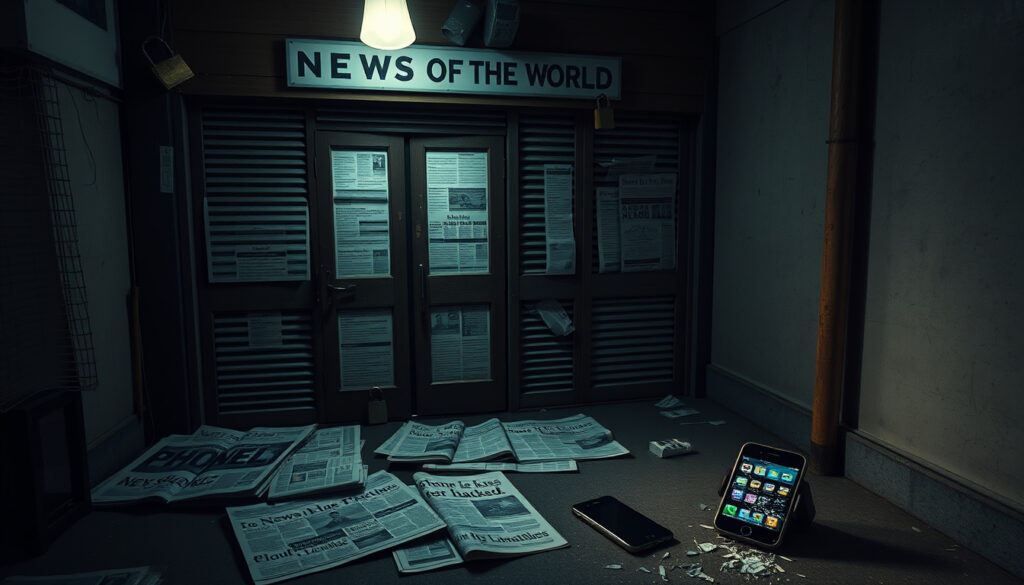
News of the World – How Phone Hacking Led to Its Closure
News of the World: The Phone Hacking Scandal That Ended a Tabloid Empire
For 168 years, the News of the World dominated British Sunday journalism. At its peak during the 1990s, the tabloid commanded readership figures that exceeded four million copies per edition. The newspaper, owned by Rupert Murdoch’s News Corporation through its subsidiary News International, built its reputation on investigative reporting and celebrity coverage that filled millions of households across the United Kingdom.
In July 2011, this legacy came to an abrupt and controversial end. Investigations revealed that the newspaper had engaged in systematic illegal voicemail interception targeting celebrities, royals, politicians, crime victims, and grieving families. The revelations prompted the paper’s sudden closure, triggered a major public inquiry, and reshaped British press regulation. The scandal exposed what Lord Justice Leveson described as a culture of disregard for privacy and ethical boundaries within parts of the British press.
The phone hacking affair remains one of the most significant media scandals in modern British history, leading to criminal convictions, substantial compensation payouts, and ongoing debates about press freedom and accountability.
Why Did the News of the World Close?
The closure of the News of the World on July 10, 2011, resulted from revelations that fundamentally altered public perception of the newspaper. Following years of allegations about illegal voicemail interception, evidence emerged in 2011 that staff had hacked the phone of Milly Dowler, a murdered schoolgirl, while she was missing in 2002.
Police investigations uncovered that journalists had deleted voicemails from Dowler’s phone, creating false hope for her family during the search. Additional revelations showed that phones belonging to relatives of British soldiers killed in conflicts and victims of the July 7, 2005 London bombings had also been targeted.
The last edition of the News of the World was published on July 10, 2011, exactly 168 years after the first issue rolled off the presses in 1843. Rupert Murdoch announced the closure personally, with the newspaper replaced by The Sun on Sunday the following year.
1843
News International (Rupert Murdoch)
July 2011
Phone Hacking Scandal
Key Facts at a Glance
- The newspaper operated for 168 years before its closure in July 2011
- Police seized 11,000 pages of notes containing evidence of nearly 4,000 potential victims
- Private investigator Glenn Mulcaire was identified as a key figure in conducting illegal interceptions
- Circulation stood at approximately 2.7 to 3 million copies weekly at the time of closure
- The scandal triggered the Leveson Inquiry into press standards
- News International paid hundreds of millions in compensation to victims
- Over 20 individuals faced arrest through Operation Weeting
| Attribute | Detail |
|---|---|
| Founded | 1843 |
| Circulation Peak | 2.8 million (2011) |
| Owner | News Corporation (News International) |
| Closure Date | 10 July 2011 |
| Primary Victims | Royals, celebrities, politicians, crime victims |
| Official Inquiries | Leveson Inquiry, Parliamentary hearings |
What Was the News of the World Phone Hacking Scandal?
The phone hacking scandal encompassed systematic illegal interception of voicemail messages by journalists and executives at the News of the World. The practice, conducted through private investigator Glenn Mulcaire and at least one staff journalist, targeted individuals across multiple categories between the 1990s and 2011.
Victims and Scope
Those affected by the illegal activities included members of the royal family, particularly Prince William’s aides such as Jamie Lowther-Pinkerton. Entertainment figures such as Jude Law and Sienna Miller were repeatedly targeted. Political figures including Members of Parliament and cabinet ministers also fell victim to the intrusion.
Perhaps most disturbing were the cases involving crime victims and their families. The interception of Milly Dowler’s voicemails in 2002 occurred while police were actively searching for the schoolgirl who had been abducted and later murdered by Levi Bellfield. Families mourning British soldiers killed in conflicts discovered that their grief had been invaded by tabloid journalists.
Police evidence revealed Mulcaire possessed 2,978 phone numbers, 91 PIN codes, and notes listing nearly 4,000 potential targets. However, investigators initially failed to notify many victims that their privacy had been breached.
The families of victims from the July 7, 2005 London bombings also discovered their phones had been hacked during one of the most traumatic periods of their lives. This revelation proved particularly damaging to the newspaper’s public standing and accelerated calls for accountability.
How the Scandal Unfolded
The investigation into phone hacking began with royal editor Clive Goodman, who was arrested in August 2006 alongside Glenn Mulcaire. Both men pleaded guilty in January 2007, receiving prison sentences of four to six months. Editor Andy Coulson resigned the same day, maintaining he had no knowledge of the illegal activities.
For several years, News International insisted the practice was limited to a single rogue reporter. This position began to crumble in 2009 when Guardian journalist Nick Davies produced evidence suggesting the problem was far more widespread. The company initially resisted these claims, but mounting evidence eventually forced a change in stance.
Operation Weeting, a dedicated police investigation launched in January 2011 with 45 to 60 officers, examined the seized evidence and led to multiple arrests. By April 2011, journalists including Ian Edmondson and Neville Thurlbeck were taken into custody, with further arrests following including James Weatherup and others.
Legal Consequences
The scandal resulted in significant legal outcomes. Andy Coulson, who had served as editor before becoming Conservative Prime Minister David Cameron’s communications director, was convicted of conspiracy in 2014. Former chief executive Rebekah Brooks was acquitted of related charges. News International admitted liability in January 2011 and began settling civil claims.
By the early 2010s, the company had paid hundreds of millions of pounds in compensation to approximately 1,000 claimants. Sienna Miller received over £100,000 in damages. Civil claims continued into subsequent years, with additional cases emerging through the 2010s and into the early 2020s.
Who Owned the News of the World?
The News of the World was owned by News International, a subsidiary of Rupert Murdoch’s News Corporation. Murdoch acquired the newspaper in 1969, adding it to a portfolio that already included The Sun and The Times. Under his ownership, the News of the World became Britain’s largest-selling Sunday newspaper.
Rupert Murdoch’s influence over the British press became a subject of intense debate throughout the scandal. His executives, including Les Hinton who served as executive chairman, faced scrutiny over their handling of the revelations. When evidence of the Dowler hacking emerged in July 2011, Murdoch made the decision to close the newspaper immediately.
News International was later rebranded as News UK, reflecting broader changes within the corporation. The BSkyB takeover bid that Murdoch pursued collapsed amid the controversy, illustrating how the scandal affected the company’s expansion ambitions.
Circulation and Reach
The newspaper commanded extraordinary readership figures throughout its final decades. During the 1990s, peak circulation reached approximately four million copies per Sunday edition. By 2011, when the scandal erupted, circulation had settled at around 2.8 million copies weekly. These numbers made it the most widely read Sunday newspaper in Britain by a significant margin.
This circulation translated to substantial advertising revenue and considerable influence over public opinion. The economic model depended on celebrity gossip and sensational stories that attracted readers, a formula that some argued created pressure to obtain information through increasingly unethical means.
Murdoch testified before the Leveson Inquiry, where he acknowledged that the practices were wrong while maintaining distance from detailed knowledge of specific incidents. His appearance marked a significant moment in British media history, as one of the most powerful figures in global publishing faced formal questioning about illegal activities at one of his newspapers.
What Is the Legacy of the News of the World?
The closure of the News of the World fundamentally altered the landscape of British journalism and press regulation. The scandal exposed deep connections between newspaper executives, politicians, and police forces that had previously operated with limited scrutiny.
The Leveson Inquiry
Prime Minister David Cameron established the Leveson Inquiry on July 6, 2011, with a broad mandate to investigate the culture, practices, and ethics of the press. Lord Justice Leveson examined evidence of phone hacking, police bribery, and the relationship between journalists and public officials over several months of hearings.
The inquiry’s findings exposed troubling arrangements between tabloid journalists and police officers who provided information in exchange for payments. These revelations damaged public trust in both institutions and prompted calls for fundamental reform of how the press operated in Britain.
The Press Complaints Commission, which had served as the industry’s self-regulatory body, was dissolved following the inquiry. In its place, proposals emerged for a royal charter on press regulation. However, the implementation remained contested, with industry body IPSO formed as an alternative to full statutory regulation.
Dramatizations and Cultural Impact
The scandal inspired several dramatizations and cultural works examining the events. These productions explored various aspects of the affair, from the personal toll on victims to the political consequences that affected government officials. The cultural response reflected ongoing public interest in understanding how such practices could persist for years without adequate accountability.
The career of Andy Coulson became particularly intertwined with the scandal’s legacy. Having served as editor during some of the most problematic periods, he subsequently became communications director for Prime Minister David Cameron. His 2014 conviction for conspiracy created lasting damage to Cameron’s administration and raised questions about vetting procedures for senior government appointments.
The scandal’s aftermath extended beyond the News of the World. Similar allegations emerged regarding other tabloid publications, including the Mirror Group, resulting in parallel investigations and additional compensation payouts. The episode contributed to a broader reckoning with intrusive journalism practices across the British press.
Public trust in tabloid journalism declined significantly in the years following the revelations. Editorial policies at many publications underwent revision, with increased attention to privacy considerations and verification procedures. However, advocates for press reform argued that fundamental changes remained incomplete.
A Chronology of Key Events
The timeline of the News of the World phone hacking scandal spans more than a decade, with roots extending into the 1990s. Understanding the sequence of revelations and responses helps contextualize the full scope of the affair.
- 1969: Rupert Murdoch acquires the News of the World, adding it to his British newspaper holdings.
- 2005–2006: Initial investigations focus on royal editor Clive Goodman and private investigator Glenn Mulcaire intercepting voicemails of royal household members.
- August 8, 2006: Police arrest Goodman and Mulcaire. Evidence seized includes 11,000 pages of notes listing nearly 4,000 potential victims.
- January 26, 2007: Goodman and Mulcaire plead guilty. They receive prison sentences of four to six months. Editor Andy Coulson resigns.
- 2009: Guardian journalist Nick Davies reveals the practice extended beyond a single reporter, contradicting News International’s position.
- January 2011: News International admits liability for civil claims. Operation Weeting relaunches with expanded police resources.
- April 5, 2011: Arrests begin including news editor Ian Edmondson and journalist Neville Thurlbeck.
- July 2011: Revelations emerge that the News of the World hacked Milly Dowler’s phone while she was missing. Public outrage intensifies.
- July 10, 2011: The final edition of the News of the World is published. Rupert Murdoch announces immediate closure after 168 years.
- 2012: The Leveson Inquiry begins examining press ethics, practices, and relationships with police and politicians.
- 2014: Andy Coulson convicted of conspiracy. Rebekah Brooks acquitted of related charges.
- 2013 onwards: Compensation payouts continue. By the early 2010s, over £100 million distributed to approximately 1,000 claimants.
What Is Known and What Remains Uncertain
Reporting on the News of the World scandal involves both well-documented facts and areas where complete information remains elusive. Understanding this distinction helps clarify what historians and investigators have definitively established versus questions that persist.
| Established Information | Areas of Uncertainty |
|---|---|
| The News of the World closed on July 10, 2011, after 168 years of publication. | The full extent of executive knowledge about the hacking activities remains disputed in some cases. |
| Rupert Murdoch’s News Corporation owned the newspaper through News International. | Complete victim lists have never been fully compiled or verified to everyone’s satisfaction. |
| Thousands of individuals were targeted through Glenn Mulcaire’s work and internal journalists. | The total financial cost of compensation and legal fees continues to be revised as new claims emerge. |
| Criminal convictions resulted for several individuals, including Andy Coulson. | Some ongoing legal proceedings mean additional information may emerge in future years. |
| The Leveson Inquiry identified systemic failures in press regulation and press-police relationships. | The long-term effectiveness of subsequent regulatory reforms continues to be debated. |
The Broader Context and Significance
The News of the World scandal emerged within a specific context of British tabloid journalism practices that had developed over decades. The competitive pressures of the popular press market created incentives to obtain exclusive stories about celebrities, royals, and public figures, sometimes through methods that skirted legal and ethical boundaries.
The case raised fundamental questions about press freedom and accountability. While journalism serves an essential democratic function in holding powerful institutions to account, the scandal demonstrated how concentrated media ownership and competitive pressures could corrupt journalistic practices. The targeting of crime victims and grieving families proved particularly troubling to public sentiment.
The political fallout affected multiple dimensions of British public life. The connection between the newspaper’s former editor and the Prime Minister’s office created perceptions of inappropriate influence. The collapse of the BSkyB takeover bid illustrated how shareholder value and corporate ambitions could be affected by reputational damage.
International observers noted the affair as an example of how media power could be challenged when sufficiently egregious conduct was exposed. The willingness of victims to pursue legal action and the persistence of investigative journalists like Nick Davies proved essential in bringing accountability to an institution that had operated with apparent impunity.
Official Responses and Key Statements
Throughout the unfolding scandal, various parties issued statements and testimony that shaped public understanding and official responses. These statements provide insight into how different stakeholders positioned themselves as the affair developed.
Rupert Murdoch addressed the revelations publicly, stating that practices uncovered were fundamentally wrong. His testimony before the Leveson Inquiry marked the first time a sitting prime minister had not been called to give evidence in such circumstances, a fact that itself generated commentary about the unique position of media proprietors.
— Parliamentary and inquiry records, 2012
Victims of the phone hacking provided statements describing the intrusion into their private grief and the discovery that their most personal communications had been accessed by tabloid journalists. These accounts proved influential in building public support for the Leveson Inquiry and for compensation claims.
— Court transcripts and victim statements
The Leveson Report itself contains extensive documentation of evidence and witness testimony, representing a comprehensive official record of the practices and culture that enabled the scandal. Further documentation of these proceedings remains available through official records.
Summary and Ongoing Relevance
The News of the World phone hacking scandal represents a pivotal moment in British media history. What began as revelations about the interception of royal voicemails expanded into a comprehensive examination of tabloid journalism practices, ultimately leading to the closure of Britain’s largest-selling Sunday newspaper after 168 years of publication.
The affair prompted the Leveson Inquiry, reshaped press regulation discussions, resulted in criminal convictions, and produced substantial compensation for victims. It exposed troubling relationships between journalists, police, and politicians while raising lasting questions about how media power should be balanced against privacy rights and accountability.
For those interested in understanding media ethics, press regulation, or the intersection of politics and journalism, the News of the World scandal provides a case study of how systemic failures can occur and the challenges involved in achieving accountability. The lessons continue to inform debates about media governance and the responsibilities of powerful news organizations.
Related coverage of media scandals and their impact on public trust in journalism can be found in broader discussions of questions about media ethics and accountability. For sports news and coverage following similar investigative revelations, additional context on professional sports reporting standards illustrates how different sectors of journalism responded to heightened scrutiny.
Frequently Asked Questions
What was the circulation of the News of the World?
At its peak during the 1990s, the News of the World sold approximately four million copies per Sunday edition. By 2011, circulation had declined to around 2.8 million copies weekly, still making it Britain’s most widely read Sunday newspaper.
Is there a movie about the News of the World scandal?
Several dramatizations have explored the phone hacking scandal and its aftermath. Productions have examined various aspects including the investigation, the political fallout, and the personal impact on victims and journalists involved.
How much compensation did victims receive?
News International paid hundreds of millions of pounds in compensation to approximately 1,000 claimants by the early 2010s. Individual payouts varied significantly, with some high-profile cases like Sienna Miller receiving over £100,000.
What happened to Andy Coulson?
Andy Coulson, who served as News of the World editor before becoming Prime Minister David Cameron’s communications director, was convicted of conspiracy in 2014. He received a prison sentence for his role in the phone hacking activities.
What was the Leveson Inquiry?
The Leveson Inquiry was established by the British government in July 2011 to investigate the culture, practices, and ethics of the press. Lord Justice Leveson chaired the inquiry, which examined phone hacking, police bribery, and press-politics relationships.
Did Rupert Murdoch testify about the scandal?
Yes, Rupert Murdoch testified before the Leveson Inquiry in 2012. He acknowledged that the practices uncovered were wrong while maintaining that he did not have detailed knowledge of specific incidents.
Who owned the News of the World?
The News of the World was owned by News International, a subsidiary of Rupert Murdoch’s News Corporation. Murdoch acquired the newspaper in 1969 as part of his expansion into British publishing.
More related posts
 Things to Do in NYC: 3-Day Itinerary, Budget & Safety Tips
 Days of Our Lives Spoilers: 2026 Cast Shakeup
 USD to INR Rate Today: Live, Forecast & History (2026)
 2022 GMC Sierra 1500 Review: Price, Specs & Reliability
 The Secret: Dare to Dream: Plot, Cast, True Story & Where to Watch
 Clyde Edwards-Helaire: PTSD, Playing Status, and 2026 Outlook
 AR Stand For: ArmaLite, Account Receivable, Augmented Reality
 Borderline Personality Disorder Symptoms: 9 Key Signs