What Is Yom Kippur? Day of Atonement Rules and Meaning
Every year, Jews around the world pause for 25 hours — no food, no work, no distractions. It’s not a punishment; it’s a reset. Yom Kippur, the Day of Atonement, is the most sacred day in Judaism, a time for fasting, prayer, and making things right with both God and other people. Whether you’re observing it yourself or just trying to understand what it means, the rules and history are simpler than they seem.
Observed by: Jews worldwide ·
Date: 10th day of Tishrei (Hebrew calendar) ·
Duration: 25 hours ·
Main practice: Fasting and intensive prayer ·
Significance: Day of Atonement and repentance
Quick snapshot
- Holiest day in Judaism (Encyclopaedia Britannica (authoritative reference))
- Day of Atonement and repentance (Chabad.org (Jewish educational organization)) (Encyclopaedia Britannica (authoritative reference))
- Observed on the 10th of Tishrei (Jewish Virtual Library (research institute)) (Encyclopaedia Britannica (authoritative reference))
- Varies each year on the Gregorian calendar (September–October) (Encyclopaedia Britannica)
- 2026: September 20–21 (Chabad.org)
- Begins at sunset, ends at nightfall (Jewish Virtual Library)
- Full fast (no food or water for 25 hours) (Chabad.org)
- Intensive prayer services in synagogue (Encyclopaedia Britannica) (Chabad.org)
- Abstaining from work, bathing, leather shoes, and marital relations (Guidance for Physicians on the Yom Kippur Fast)
- Atonement for sins against God (Encyclopaedia Britannica)
- Reconciliation with fellow humans (Chabad.org)
- Sealing of the divine judgment for the new year (Jewish Virtual Library)
Six key facts, one pattern: Yom Kippur is anchored in ancient texts, centered on self-denial, and aimed at spiritual renewal.
| Label | Value |
|---|---|
| Hebrew name | Yom Kippur (יוֹם כִּפּוּר) (Encyclopaedia Britannica) |
| Date | 10 Tishrei (Chabad.org) |
| Duration | 25 hours (sunset to nightfall) (Jewish Virtual Library) |
| Main observances | Fasting, prayer, repentance (Encyclopaedia Britannica) |
| Scriptural basis | Leviticus 16:29-31, Leviticus 23:27-28 (Bible Gateway (online Bible translation)) |
| Meaning | Day of Atonement (Chabad.org) |
What are the five rules of Yom Kippur?
Traditional Jewish law, derived from Leviticus 16:29-31, lists five prohibitions — known as the “five afflictions” — that define the day.
What is the rule of fasting?
- No eating or drinking for the full 25-hour period, from sunset to nightfall (Jewish Virtual Library).
- This includes both food and water — even a small amount breaks the fast (Chabad.org).
What is the rule of no washing?
- Bathing or washing for pleasure is prohibited. Rinsing fingers after using the bathroom is allowed (Encyclopaedia Britannica).
What is the rule of no anointing?
- Applying oils, creams, or lotions is forbidden, even for moisture (not just perfume) (Guidance for Physicians on the Yom Kippur Fast).
What is the rule of no leather shoes?
- Leather footwear is not worn as a sign of humility; canvas or rubber shoes are acceptable (Jewish Virtual Library).
What is the rule of no marital relations?
- Spousal intimacy is abstained from for the entire day (Chabad.org).
The implication: these five prohibitions intentionally create physical discomfort to heighten spiritual awareness.
What is forbidden on Yom Kippur?
What activities are prohibited beyond the five afflictions?
- All forms of creative work (similar to Shabbat) are forbidden, including writing, cooking, and handling money (Chabad.org).
- Many Jews also avoid wearing gold jewelry, as a custom of humility (Encyclopaedia Britannica).
What is the consequence of violating the prohibitions?
- In traditional Judaism, breaking Yom Kippur rules is considered a serious transgression, requiring sincere repentance (Jewish Virtual Library).
Are there exceptions for health or safety?
- Yes — if fasting endangers life, it is not merely permitted but required to eat (Jewish Virtual Library).
- Children under nine and women in childbirth until the third day after delivery are exempt from the fast (Jewish Virtual Library).
The line between pious devotion and legalistic burden can blur. For a pregnant woman in distress, skipping the fast is not a failure — it’s a mitzvah to preserve life.
The pattern: exceptions for health and safety underscore that Jewish law prioritizes life over ritual.
Was Yom Kippur in the Bible?
What does the Torah say about Yom Kippur?
- Yom Kippur is explicitly described in Leviticus 23:27-28 as a day of atonement and complete rest (Bible Gateway).
- Leviticus 16 details the ritual of the High Priest entering the Holy of Holies and the scapegoat sent to Azazel (Chabad.org).
Is Yom Kippur mentioned in the New Testament?
- The New Testament does not directly name Yom Kippur, though the Book of Acts references the “Day of Atonement” (Acts 27:9) as a recognized Jewish observance (Bible Gateway).
Did Jesus celebrate Yom Kippur?
- As a Jew living in the 1st century, Jesus almost certainly observed Yom Kippur, but no Gospel records his personal participation (Encyclopaedia Britannica). Some scholars argue the holiday evolved significantly after the Second Temple’s destruction in 70 CE (Chabad.org).
What this means: the biblical foundation is clear, but the holiday’s form has adapted over centuries.
What happened at Yom Kippur?
What are the main synagogue services?
- Five prayer services: Ma’ariv (evening with Kol Nidre), Shacharit (morning), Musaf (additional), Minchah (afternoon), and Neilah (concluding) (Chabad.org).
What is the Kol Nidre service?
- Kol Nidre is a solemn Aramaic declaration recited at the start of Yom Kippur evening, annulling personal vows made to God in the coming year (Encyclopaedia Britannica). The earliest recorded text dates from the 8th century (Chabad.org).
What is the Neilah service?
- Neilah, the closing service, is the final plea for forgiveness before the “gates of heaven” close at nightfall (Jewish Virtual Library). Worshipers stand and pray intensely.
What is the significance of the shofar at the end?
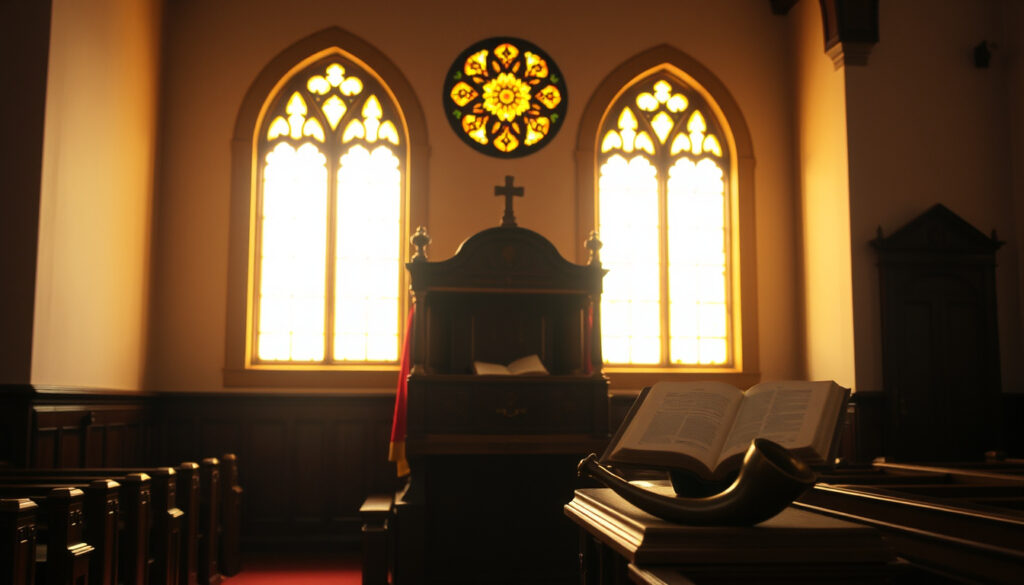
- A single long blast of the shofar (ram’s horn) marks the end of Yom Kippur and the conclusion of the fast (Chabad.org).
What Is Yom Kippur 2026?
- Yom Kippur 2026 begins at sunset on September 20 and ends at nightfall on September 21 (Chabad.org).
- Begin the fast at sunset on the eve of Yom Kippur.
- Attend the Kol Nidre evening service.
- Observe the five prohibitions: no eating, drinking, washing, anointing, leather shoes, or marital relations.
- Attend the five prayer services throughout the day.
- End the fast at nightfall after the Neilah service and the shofar blast.
For a non-Jewish friend or neighbor, knowing that Yom Kippur ends with a shofar blast helps you recognize the moment and offer a simple “good end of fast” instead of an awkward “happy holiday.”
The catch: simple courtesy goes a long way in respecting a solemn day.
What do non-Jews say to Jews on Yom Kippur?
What are appropriate greetings for Yom Kippur?
- “Have an easy fast” and “Gmar chatima tova” (may you be sealed for a good year) are common (Encyclopaedia Britannica).
- “Wishing you a meaningful Yom Kippur” is a respectful alternative for non-Jews (Jewish Virtual Library).
Can non-Jews wish a meaningful fast?
- Yes — acknowledging the fast with sincerity is appreciated. A simple “thinking of you today” works too (Encyclopaedia Britannica).
What should non-Jews avoid saying?
- Avoid “Happy Yom Kippur” — the day is solemn, not celebratory (Chabad.org). Also avoid jokes about fasting or pressure to break the fast.
The catch: simple courtesy goes a long way in respecting a solemn day.
Timeline: Yom Kippur through the ages
The history of Yom Kippur spans from the biblical desert to modern synagogues. Six milestones show how the day evolved.
- c. 1400 BCE (biblical dating): Torah establishes Yom Kippur as a day of atonement for the Israelites (Bible Gateway).
- Second Temple period (516 BCE–70 CE): High Priest performs elaborate atonement rituals in the Holy of Holies (Chabad.org).
- 70 CE: Destruction of the Second Temple; Yom Kippur observance shifts to synagogue prayer and personal repentance (Jewish Virtual Library).
- Middle Ages: Development of the Kol Nidre prayer and major liturgical poems (piyyutim) (Encyclopaedia Britannica).
- 20th century: Yom Kippur becomes widely observed even among secular Jews; the Yom Kippur War (1973) adds modern significance (Encyclopaedia Britannica).
- 2026: Yom Kippur begins at sunset on September 20 and ends at nightfall on September 21 (Chabad.org).
The pattern: each era reshaped how Yom Kippur is observed while preserving its core of atonement.
Clarity: Confirmed facts vs. what’s unclear
Confirmed facts
- Yom Kippur is the holiest day in Judaism (Encyclopaedia Britannica).
- Fasting (no food or drink) is a central requirement (Chabad.org).
- The holiday is based on the biblical Day of Atonement (Leviticus 16 and 23) (Bible Gateway).
- Yom Kippur 2026 falls on September 20-21 (Chabad.org).
What’s unclear
- Exact origins of some customs like Kol Nidre (first appears in 8th century) (Encyclopaedia Britannica).
- Whether Jesus personally observed Yom Kippur (no direct New Testament record) (Bible Gateway).
- Degree of observance among ancient Israelites before the Babylonian exile (Chabad.org).
- Whether the prohibition of wearing leather shoes was part of the original biblical commandment or a later rabbinic enactment (Jewish Virtual Library).
The implication: even well-documented traditions have areas of historical ambiguity.
Quotes that capture the spirit of Yom Kippur
“Because on this day atonement will be made for you, to cleanse you. Then, before the Lord, you will be clean from all your sins.”
— Leviticus 16:30 (NIV) (Bible Gateway)
“Yom Kippur means ‘Day of Atonement,’ as the verse states, ‘For on this day He will forgive you, to purify you, that you be cleansed from all your sins before G‑d.'”
— Rabbi Shraga Simmons, Chabad.org (Chabad.org)
“On Yom Kippur it is forbidden to eat, drink, wash, anoint oneself, wear leather shoes, or engage in marital relations.”
— Mishnah Yoma 8:1 (Sefaria (open-source Jewish texts library))
For the person fasting, Yom Kippur is a day of physical discomfort but spiritual release. For the outsider, it’s a window into the Jewish tradition of accountability. The consequence is the same: you walk away from the day lighter — not because you ate, but because you made things right.
Related reading: Psalm 34:18 Meaning: God’s Comfort for the Brokenhearted
en.wikipedia.org, blogs.brighton.ac.uk, chabad.org, gist.github.com, jewishvirtuallibrary.org, svaj.org, diversity.med.wustl.edu, unpacked.media, britannica.com
Frequently asked questions
What is the meaning of the name Yom Kippur?
Yom Kippur literally means “Day of Atonement” — the day on which Jews seek forgiveness from God and from other people (Encyclopaedia Britannica).
How long does Yom Kippur last?
It lasts approximately 25 hours, from sunset to nightfall (Jewish Virtual Library).
What prayers are recited during Yom Kippur?
Five services: Kol Nidre (evening), Shacharit, Musaf, Minchah, and Neilah. The Unetanneh Tokef prayer is also central (Chabad.org).
Can you work on Yom Kippur?
No — all creative work is prohibited, similar to the Sabbath (Chabad.org).
What is the difference between Yom Kippur and Rosh Hashanah?
Rosh Hashanah (the Jewish New Year) begins the 10-day period of repentance that ends with Yom Kippur. Yom Kippur is the day of final judgment and atonement (Encyclopaedia Britannica).
What is the significance of wearing white on Yom Kippur?
Wearing white symbolizes purity and the desire to be cleansed of sin. It is also reminiscent of the white garments worn by the High Priest during the Temple service (Jewish Virtual Library).
Do you have to fast if you are sick or pregnant?
No — Halakha (Jewish law) exempts those whose health would be endangered. Pregnant women, nursing mothers, and the ill are not only allowed but often required to break the fast (Guidance for Physicians on the Yom Kippur Fast).
More related posts
 Land Rover Range Rover: Differences, Prices in Ireland & Models
 How to Lower A1C: Proven Strategies from Medical Experts
 Chiefs Release Wide Receiver: Full List of 7 Players Cut in 2025
 Starbucks Fall Menu 2025 – Drinks, Prices and Reviews
 Supreme Court Birthright Citizenship Decision 2026: Ruling
 Magnesium Glycinate Side Effects: Safety and Dosage Guide
 Canada vs USA Lineups – Predicted XIs for Nations League Playoff
 Shutterfly Free Shipping Code: SHIP99 & SHIPGIFTS (2026)