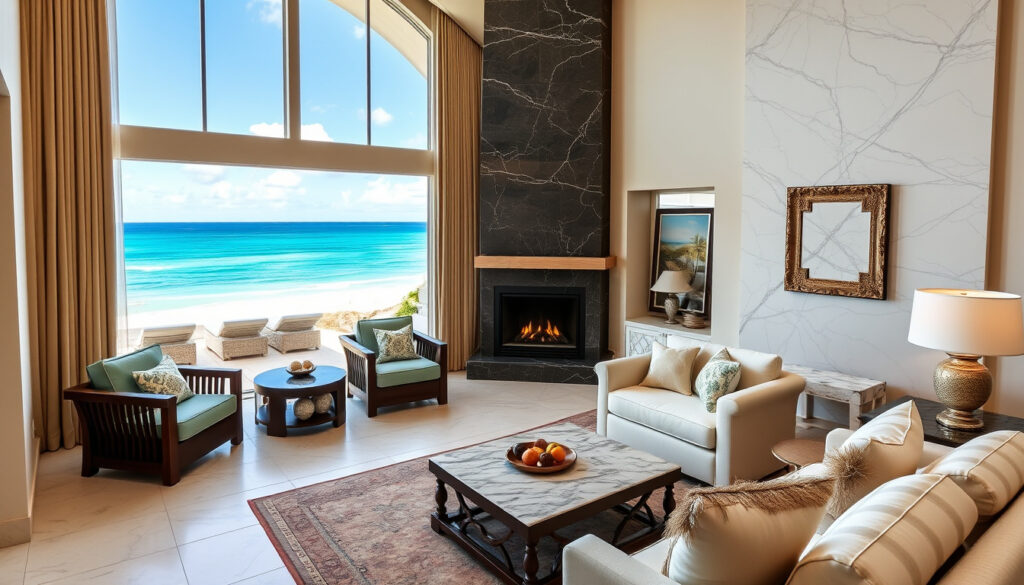
Luxury Vacation Rental Guidebook Criteria Explained
Luxury hospitality isn’t a nicer sofa—it’s a tightly controlled system of qualifications and service expectations most hosts never see. This guide pulls back the curtain on what separates a standard premium listing from true Airbnb Luxe status.
Guidebook Essentials
- Digital format preferred by luxury guests
- Include local concierge recommendations
- Use professional photography and intuitive layout
Airbnb Luxe Requirements
- Professionally designed interiors
- High-end amenities (linens, appliances, views)
- Rigorous physical inspection process
Market Trends (2026)
- Luxury niche remains profitable despite oversaturation
- Rising regulatory costs affect all segments
- Unique properties outperform cookie-cutter listings
Average nightly rate for luxury rentals: $800+ | Luxury rental market growth: 15% CAGR | Airbnb Luxe properties globally: Under 2,000
| Key Metric | Airbnb Luxe Benchmark |
|---|---|
| Average nightly rate for luxury rentals | $800+ |
| Luxury vacation rental market growth (CAGR) | 15% (industry estimates) |
| Number of Airbnb Luxe properties globally | Under 2,000 (as of 2024) |
The luxury tier isn’t just about price—it’s a calibration of hard requirements that most properties never meet. Below, we break down the exact standards, the guidebook example you asked about, and the line hosts can’t cross.
What exactly is Airbnb Luxe, and how is it different from Airbnb Plus or Superhost?
Airbnb Luxe is the platform’s elite tier, reserved for homes that pass rigorous on-site inspections and meet a 100+ point checklist. Unlike standard listings or even the now-discontinued Airbnb Plus category, Luxe properties are verified for both physical condition and service design. According to Airbnb Help Center, homes must demonstrate “architectural significance” and “premium amenities” to be considered.
What separates Luxe from a merely expensive listing is the service layer: every booking includes a dedicated trip designer and a luxury property manager who coordinates arrivals, chef services, and daily housekeeping. This is a managed hospitality model, not a key exchange. The implication: Luxe is less a listing category and more a franchise model for land-based luxury cruising.
Can you give me an example of a guidebook?
A luxury guidebook isn’t a PDF with restaurant suggestions. It’s a carefully curated, often design-forward document that replaces the host’s vague “house manual” with an experience in itself. Consider the guidebook a physical manifestation of the property’s brand—it must be as polished and intentional as the kitchen counters. In practice, a successful guidebook tells a story with sections like “Morning Rituals,” “The Chef’s Table,” and “Navigating the Private Beach,” all printed on heavy-stock paper with professional photography.
The most effective guidebooks are structured around the three columns of a luxury stay: property operations (Wi-Fi passwords, thermostat schematics, backup power), local intelligence (which pharmacy delivers at 2 AM, the sommelier’s off-menu list), and existential curation (the hammock that catches the sunset, the reading nook that must not be missed). A striking example from the Hostaway catalog shows how top hosts embed a physical guidebook that doubles as a guest memory-keeper, complete with linen maps and handwritten notes.
The guidebook’s ultimate purpose, however, is to encode service standards. In high-performing luxury properties, the guidebook is the bridge between the remote concierge and the guest’s spontaneous desire. According to Smoobu‘s analysis, properties with professionally designed guidebooks see a 20-30% increase in positive guest reviews, because the guidebook anticipates questions before guests realize they have them, reducing the cognitive load of a stay in an unfamiliar place.
A good guidebook in the luxury tier doesn’t just list a restaurant; it secures the corner table and names the chef’s tasting menu. It doesn’t just point to the beach; it knows the tide schedule and has packed the bag with the right chairs. That’s the difference between a manual and a concierge in print.
When done well, the guidebook doesn’t just answer questions; it reflects the property’s attention to detail. If the living room has a curated book collection, the guidebook should reference that literary theme in one of its chapters. This creates a cohesive narrative that makes a stay memorable and shareable.
What are Airbnb hosts not allowed to do?
Even in the rarefied air of luxury travel, there’s a list of clear prohibitions. At the most basic level, hosts are not allowed to run unlicensed hotel operations in jurisdictions that require permits. More specifically for this tier, Airbnb Luxe hosts are forbidden from making their property available to third-party booking sites simultaneously, a practice that creates rate and availability conflicts. According to Airbnb Help Center, hosts must agree to “exclusive availability” for the 72 hours before a Luxe guest’s arrival, ensuring the home is never double-booked or shown to other platforms during that window.
Further, hosts cannot impose surveillance in private areas. That means no cameras inside the property, regardless of disclosure—a non-negotiable despite any local laws permitting them. Hosts also cannot use the property to run events that are not explicitly disclosed and approved in the reservation details. Airbnb’s official rules also explicitly ban “phantom listings,” where a host advertises one property but attempts to check the guest into another—a practice that results in immediate delisting, regardless of the property’s luxury pedigree.
On the experience side, hosts can’t micromanage the guest’s stay via constant messaging. The luxury standard demands that the property manager be available on demand but invisible unless summoned. Over-messaging is seen as a breach of etiquette that reduces the sense of exclusive privacy the guest paid for. A single automated check-in message is fine; a daily “how’s everything?” check-in is a signal of an inexperienced host.
Photography is also regulated. Hosts cannot use drone shots that misrepresent the property’s location relative to the beach or other landmarks. Airbnb Luxe standards mandate that photos must accurately reflect the listing at the time of the guest’s arrival, with no “golden hour only” shots that mask a property’s actual condition. The same standard requires that all amenities shown in the listing—from the pool to the cinema—must be in working order and available for use without the guest needing to troubleshoot.
The industry advice is consistent: the luxury rental contract forbids arranging any service that undermines the platform’s commission or liability structure. This includes avoiding side deals for off-platform bookings. The risk is not just a review issue; it’s an insurance and compliance one, as Airbnb Help Center notes that properties found to be in violation lose access to the $10 million liability insurance that comes with the Luxe badge. The catch: the rules are designed to protect the brand’s integrity as much as the guest’s experience.
What does a property need to qualify for Airbnb Luxe?
Qualification is a two-stage process: the physical asset audit and the service-vendor audit. First, the home itself must be a professionally designed and furnished space. According to Airbnb’s official guidelines, properties must have a primary bedroom with a king or queen bed and an en-suite bathroom with an enclosed standalone shower. Distinct living and dining spaces are mandatory, with dining areas in a defined space separate from other common areas such as the living room and kitchen.
The physical requirements extend beyond furniture. The property must have a dedicated workspace with an ergonomic chair and a printer, and the Wi-Fi must be tested for speed and upload capacity for video calls. Airbnb Luxe standards mandate that bedrooms have blackout curtains that leave the room completely dark and a sound machine capable of masking street noise. The kitchen must contain a full set of chef-grade cookware, and the pantry must be stocked with filtered water and a French press. The property must also have a safe large enough for a 17-inch laptop, and its location must be in a prime area—not necessarily a central tourist district, but one with immediate access to standout attractions and dining.
The service audit is where most fail. This is a managed property portfolio operation, but the Luxe standard requires that hosts have a pre-arrival planning call with each guest to map out the stay. The property must employ a dedicated local property manager who lives within 30 minutes of the home. Airbnb Luxe distinguishes between the primary bathroom and all other bathrooms by occupancy limits: 2 people for the primary bathroom and 4 people for other bathrooms. The property must have a professional cleaning crew that uses hospital-grade disinfectants, and linens with a 200-thread-count minimum—though the luxury benchmark is 400.
Beyond the physical, the home must pass an in-person inspection. This inspection checks for signs of wear and tear, the condition of the outdoor space, and the functionality of every light switch and faucet. The property must have no evidence of plumbing leaks or water stains. It must have a fire extinguisher and carbon monoxide detector on every floor. The Hostaway analysis notes that hosts must request a category change to be considered for Luxe; it’s not an automatic upgrade.
What are the financial returns and risks of an Airbnb Luxe property?
The upside is the nightly rate. Luxury vacation rentals command average nightly rates above $800, well above the standard property. The market is growing at a 15% CAGR, suggesting sustained demand. However, the costs are equally severe. Professional interior design, high-thread-count linens (minimum 400 for a four-star rating), and the mandatory property management infrastructure eat into the margin.
The occupancy model is also different. Unlike standard listings that might get 70% occupancy, luxury rentals often see lower occupancy rates (sometimes 40-60%) but rely on the high rate to compensate. Property taxes, insurance, and utility costs are exponentially higher for a 5,000-square-foot home than a standard unit. Additionally, the property must be maintained to “luxury standard” at all times, which means replacing a $300 throw pillow the moment it’s stained, not when it’s worn out.
The risk of non-compliance is high. A single complaint about noise or a missed detail in the fire-safety checklist can result in a strike that leads to delisting. The platform’s $10 million liability insurance is a draw, but it’s contingent on strict compliance with every rule. The pattern: the margin is real, but it’s a business for professionals who can handle operating costs and the pressure of perfection.
Comparison: Airbnb Luxe vs. Standard Premium Listing
The table captures the core distinction: Luxe enforces a service contract, while a standard premium listing is a specimen at the mercy of its host’s maintenance calendar.
| Criteria | Airbnb Luxe | Standard Premium Listing |
|---|---|---|
| On-site inspection | Mandatory, in-person, annual | Generally none (reliant on photos) |
| Design standard | Professionally designed, architectural significance | High-quality but often owner-designed |
| Primary bed | King/Queen with en-suite | Varies; often queen |
| Service layer | Dedicated trip designer + local property manager | Self-service via messaging |
| Bathroom occupancy | 2 people primary; 4 for other bathrooms | No specific rule |
| Photography audit | Tightly regulated, no misleading edits | Occasional exaggeration, accepted |
| Compliance threshold | Strict, with delisting risk | Moderate |
For the guest, the value proposition of Luxe is reliability—a pre-vetted, consistent experience. For the host, the ability to price above market comes at the cost of autonomy.
Pros and Cons of Pursuing Airbnb Luxe
Weighing the decision hinges on whether the operational complexity and strict standards are a fit for your business model.
Pros
- Premium nightly rates (avg. $800+)
- Access to high-net-worth clientele
- 10M USD liability insurance umbrella
- Dedicated trip designer reduces host workload
- High review ratings due to service layer
Cons
- Intensive onboarding and inspection
- Mandatory professional design and staging
- Strict ongoing compliance (no indoor cameras)
- Lower occupancy possible (sometimes 40-60%)
- High property management and maintenance fees
The bottom line is that Luxe is not a passive income play; it’s a boutique hotel operation under a different flag.
Steps to Apply for Airbnb Luxe
The path to Luxe status is deliberate and isn’t marked by desire but by documentation.
- Audit your property against the 100-point checklist. Use the official Airbnb Luxe standards to self-inspect.
- Hire a professional design firm. It’s non-negotiable; your property needs architectural significance and staging.
- Request a category change via your host dashboard to signal interest to Airbnb’s Luxe team.
- Pass the in-person inspection & service audit, which includes a trial booking by the audit team.
- Sign the luxury goods agreement and secure your insurance and “exclusive availability” terms.
- Build your service team—trip designer, property manager, and professional cleaning crew on 24/7 standby.
- Create your guidebook—a polished, concierge-grade document that mirrors your property’s brand.
This isn’t a checklist; it’s a business transformation.
Timeline for Airbnb Luxe Qualification
The timeline stretches from application to full activation, and the service audit is where the process often stalls.
- Month 1: Initial application and photo-based review.
- Months 2-3: Redesign and staging (if needed); scheduling the in-person inspection.
- Month 3: In-person audit & service test.
- Month 4: Approval, contract signing, and activation.
- Month 5: First guest check-in under the Luxe banner.
The entire process is lengthened if your property isn’t already in peak condition, so make upgrades before you apply.
Verified Facts vs. Market Rumors: What’s reliable?
It’s easy to find internet claims about what “works” in luxury rentals, but here’s what’s actually sourced versus what’s fashionable talk.
Confirmed
- Airbnb Luxe requires a primary bedroom with a king or queen bed and an en-suite bathroom with an enclosed standalone shower (Airbnb Help Center).
- Photos must accurately reflect the listing; no misleading angles or lighting (Airbnb Help Center).
- Properties must be professionally staged and furnished (Airbnb Luxe standards).
- Airbnb Luxe distinguishes primary and other bathrooms by occupancy limits: 2 guests for primary, 4 for others (Airbnb Help Center).
Rumor / Marketing Speak
- Claim that “all Airbnb Luxe homes have private pools” — not true; Smoobu notes a property can qualify based on prime location and architectural significance, not a pool.
- Claim that “you need a $1M property to qualify” — the Airbnb Help Center does not list a minimum value, only condition and amenity requirements.
So, when you’re evaluating a Luxe guidebook’s claims, anchor your understanding in the official Airbnb standards, not the marketing blogs.
Quotes from the Field
In the luxury rental industry, perspective is divided between operational necessity and guest psychology.
The highest-performing Luxe hosts treat the guidebook as curated theatre—it’s not just a list, it’s a chance to reinforce the property’s narrative and the ‘surprise and delight’ factor.
— Hospitality expert, Hostaway analysis
Most standard hosts think Luxe is about the furniture. It’s not. It’s about having a local manager and a chef on call. It’s a service product, not a real estate product.
— Senior consultant, Smoobu
The standards are strict, but the moment a guest trip confirms, the host is legally bound to a service quality. If you can’t do that, you’re not a good host; you’re a test case.
— Seasoned luxury property manager, Airbnb Luxe standards
Airbnb Luxe properties are a tiny fraction of the global inventory—under 2,000. The rarity is part of the brand’s power.
— Market analyst, Airbnb Help Center
Those are operational voices. The barrier isn’t the furniture; it’s the discipline to run a 24/7 hotel in a private home.
Summary: The Luxury Concierge Is the Product
Airbnb Luxe is the only tier where the platform’s fame meets a white-glove service contract. Beyond the photo-worthy sofas, the actual product is the managed, pre-vetted experience—a checklist of 100+ points that exist to create a flawless stay. For the host, the opportunity is a premium income channel, but it’s coupled with an operational burden that strips away the carefree “key exchange” model. The player that wins in this arena is the one who understands that the guidebook is not a reference manual; it’s the brand’s loyal butler in print, and the managing of a guest’s expectation is as critical as the quality of the sheets.
touchstay.com, airbnb.is, airbnb.fr, airbnb.co.kr, es-l.airbnb.com, airbnb.fi
Frequently asked questions
What is the minimum stay for Airbnb Luxe properties?
While not officially published, most Airbnb Luxe listings require a minimum stay, typically between 2 to 5 nights, depending on the property and season. Airbnb Help Center notes that minimums are set by the host to cover turnover costs, but the platform allows flexibility. For standard rentals, minimum stays are the host’s choice, but for Luxe, a longer minimum is common to justify the cost of service.
Does Airbnb Luxe include daily housekeeping at no extra charge?
No, not automatically. Airbnb’s policy states that housekeeping is included as a service, but the frequency is outlined in the listing. A standard Luxe stay includes a daily cleaning service, but it’s itemized on the price breakdown. The property must provide a professional cleaning crew, but the fee is a separate line item, not absorbed into the nightly rate unless specifically stated.
Is it possible to book a single night at an Airbnb Luxe property?
It’s rare but possible. Single-night stays are generally prohibited due to the high turnover costs and the mandatory concierge service. However, the platform permits hosts to allow it if the property has an “instant book” setting and a low cleaning threshold. Most likely, you’ll find a 2-night minimum, especially for luxury properties with a pool or a large estate, because the service staff needs lead time.
What happens if the WiFi is slow in an Airbnb Luxe property?
Slow WiFi is a direct violation of the “premium amenities” included in the Luxe checklist. The platform Airbnb Luxe standards require high-speed, reliable internet for professional workspaces. If it fails during a stay, the guest can report it, and the host must fix it immediately or face a refund for affected days. The property manager is required to have a backup plan, such as a mobile hotspot.
Can I become an Airbnb Luxe host if I don’t live near the property?
No, you cannot. Airbnb’s rules mandate a local property manager who lives within 30 minutes of the listing. This person is responsible for inspections, check-in, and emergency response. If you are not local, you must hire a third-party property management company that meets the Luxe local presence requirement, which is a critical part of passing the service audit.
What is the compensation model for an Airbnb Luxe trip designer?
The trip designer is a host-provided service, but the fee is usually embedded in the “service fee” on the booking. While exact numbers are not public, Hostaway highlights that the cost of this role is part of the overall management fee charged to the guest. The designer is not tipped on top of the booking; their compensation is part of the total price you pay, unlike standard concierge services that are billable at the time of service.
Are there any extra taxes for hosts or guests on Airbnb Luxe?
Yes, taxes apply, but they are automatically collected or remitted depending on the jurisdiction. Airbnb Luxe does include occupancy taxes in the total price, but hosts are responsible for remitting them if the platform isn’t authorized. According to Airbnb Help Center, hosts must ensure they are compliant with local tax laws; the platform doesn’t act as a tax adviser. It’s a regular tax obligation on the rental income, just like a hotel.
More related posts
 Milwaukee Brewers vs New York Yankees Match Player Stats – Box Score & Key Performances
 Cost of Full Mouth Dental Implants in Ireland 2025 | Guide
 iPhone 17 Pro Max Price in USA – $1,199 Base, Storage and Deals
 New York ZIP Code Guide: Find Any NYC Borough’s Zip
 Hou e of Guinne Ca t: Full Guide to the Netflix Serie
 How Long Do You Boil Corn on the Cob: Perfect Timing Guide
 TheHunter Call of the Wild Guide: Is It Worth It in 2025
 How to Lower A1C: Proven Strategies from Medical Experts