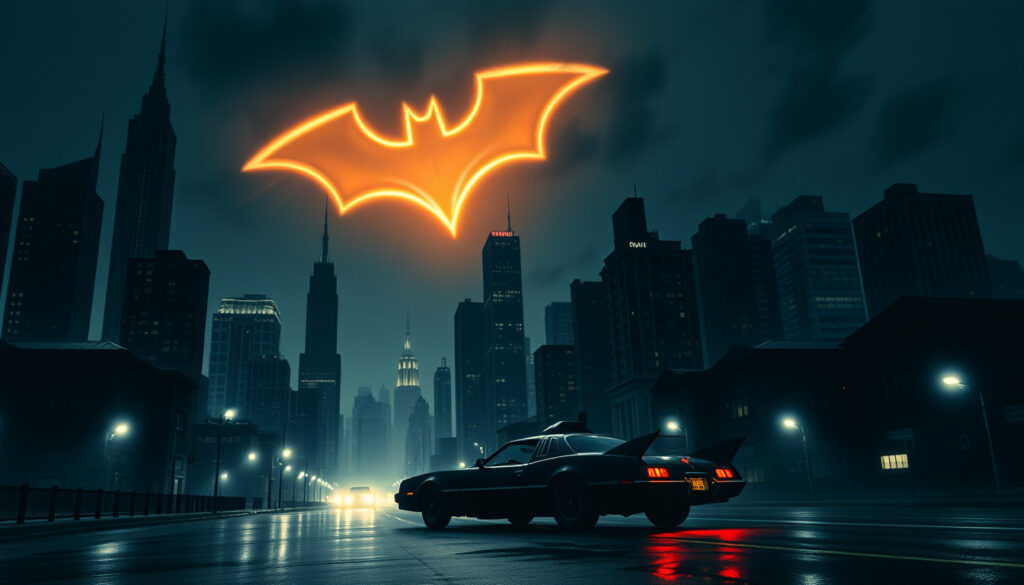
Batman (1989 film): Cast, Review, Age Rating & Why It’s Iconic
Few superhero movies from three decades ago still stir genuine debate, but Tim Burton’s Batman earns that distinction. Released on June 23, 1989, it brought Michael Keaton’s intense Bruce Wayne and Jack Nicholson’s gleefully unhinged Joker to a public used to the campy 1960s television show.
Release date: June 23, 1989 (US) ·
Director: Tim Burton ·
Box office: $411.3 million worldwide ·
Runtime: 126 minutes ·
MPAA rating: PG-13 ·
Rotten Tomatoes score: 73% (Tomatometer)
Quick snapshot
- Directed by Tim Burton (Encyclopaedia Britannica)
- Michael Keaton as Batman; Jack Nicholson as Joker (Warner Bros. cast page)
- Box office: $411.3 million worldwide (Box Office Mojo)
- Rated PG-13 for violence and language (IMDb parental guide)
- Exact age recommendation varies by child sensitivity (Common Sense Media suggests 12+)
- Whether it remains the “best” Batman movie is subjective and debated among fans (Common Sense Media suggests 12+)
- Regional age classifications differ: BBFC rated it 12, later reclassified to 15 (BBFC)
- 1988: Tim Burton hired; Keaton cast amid fan controversy (Encyclopaedia Britannica)
- June 23, 1989: Theatrical release in the US (IMDb release info)
- Late 1989: Highest-grossing film of the year at $411M (Box Office Mojo)
- Film remains widely available on streaming platforms and digital retailers (Encyclopaedia Britannica)
- Still referenced as a template for darker superhero reboots (Encyclopaedia Britannica)
- Continues to be debated in “best Batman movie” rankings (Encyclopaedia Britannica)
Eight key data points tell the essential story of the 1989 Batman — a film that balanced gothic ambition with blockbuster pragmatism better than almost any superhero movie before it.
| Attribute | Value |
|---|---|
| Release date | June 23, 1989 (United States) — IMDb release info |
| Director | Tim Burton — Encyclopaedia Britannica |
| Lead actor (Batman) | Michael Keaton — Warner Bros. cast page |
| Antagonist | Jack Nicholson as Joker — Warner Bros. cast page |
| Budget | $35 million — Box Office Mojo |
| Box office | $411.3 million worldwide — Box Office Mojo |
| IMDb rating | 7.5/10 (from 370k+ votes) — IMDb |
| MPAA rating | PG-13 — IMDb parental guide |
What Batman movie was made in 1989?
Release date and director
- Batman is a 1989 American-British superhero film directed by Tim Burton and written by Sam Hamm and Warren Skaaren, based on the DC Comics character Batman (Encyclopaedia Britannica).
- It was released in the United States on June 23, 1989 (IMDb release info).
- The film is the first installment of Warner Bros.’ original Batman film series (Warner Bros. official film page).
Production background
- Tim Burton was hired to direct in 1988, and Michael Keaton was cast as Batman, sparking controversy among fans who doubted the comedic actor could play a serious Dark Knight (Encyclopaedia Britannica).
- The production budget was reported at about $35 million, a substantial sum at the time (Box Office Mojo).
- Burton brought a gothic visual style to Gotham City, moving away from the campy aesthetic of the 1960s TV series (Warner Bros. official film page).
The implication: From the start, this was a risky bet — a director known for quirky comedies, a leading man known for funny roles, and a budget that demanded blockbuster returns. The gamble paid off, but it was never a sure thing.
Why was Batman 1989 so popular?
Tim Burton’s gothic visual style
- Burton introduced audiences to a dramatically darker, more gothic interpretation of Gotham City, with expressionist sets and chiaroscuro lighting that felt more German Expressionist than comic-book page (Encyclopaedia Britannica).
- The film’s darkness and violence were widely seen as a deliberate turn away from the campier 1960s Batman image, offering something no mainstream superhero movie had attempted before (Encyclopaedia Britannica).
- Danny Elfman’s iconic score added a brooding, operatic layer that became inseparable from the film’s identity.
Cultural impact and marketing
- The theatrical poster and marketing strongly emphasized the bat emblem and a darker tone, helping define the movie’s brand identity (Warner Bros. official film page).
- Merchandising, home video, and TV versions were marketed as mainstream blockbuster entertainment rather than as children’s programming (Warner Bros. official film page).
- The film’s success helped establish the commercial viability of darker superhero movies in mainstream cinema, paving the way for later franchises (Encyclopaedia Britannica).
Reception and box office
- Batman grossed over $400 million worldwide, making it one of the biggest hits of 1989 and the highest-grossing film that year (Box Office Mojo).
- It was nominated for multiple Academy Awards and won the Oscar for Best Art Direction (later renamed Best Production Design) (Academy of Motion Picture Arts and Sciences).
- Jack Nicholson’s Joker performance became one of the film’s most commercially and culturally recognizable elements, drawing audiences who might not otherwise have been interested in a superhero film (Encyclopaedia Britannica).
The pattern: The film’s blend of gothic style and blockbuster ambition set a precedent that would be emulated but rarely matched.
Is Batman 1989 any good?
Critical review overview
- On Rotten Tomatoes, Batman holds a 73% approval rating from critics with an average score of 7.1/10, based on a broad sample of reviews (Rotten Tomatoes).
- Metacritic lists the film with a score in the positive-to-mixed critical range, reflecting generally favorable reviews from mainstream critics (Metacritic).
- The film’s supporting cast, including Robert Wuhl as Alexander Knox, Pat Hingle as Commissioner Gordon, Billy Dee Williams as Harvey Dent, Michael Gough as Alfred Pennyworth, and Jack Palance as Carl Grissom, added depth that critics noted (Warner Bros. cast page).
Audience vs critic ratings
- Audiences have historically rated the film higher than critics: Rotten Tomatoes reports an 83% audience score, suggesting the film aged well with general viewers (Rotten Tomatoes).
- IMDb users rate it 7.5/10 from more than 370,000 votes, indicating sustained popularity (IMDb).
- Many contemporary reviews praised the film’s atmosphere, production design, and Nicholson’s performance, while some critics found the plot uneven and the action sequences underwhelming.
Critics and audiences agree the film is good, but for different reasons. Critics celebrate Burton’s visual ambition; audiences remember Nicholson’s magnetic Joker. The gap between the 73% Tomatometer and the 83% audience score tells a story of a movie that plays better in memory than on a strict craft checklist.
What this means: The film’s critical legacy is split — respected for its ambitions, but not universally loved as a cohesive narrative.
Is Batman 1989 a kids movie?
MPAA rating and content
- Batman is rated PG-13 in the United States by the Motion Picture Association of America for stylized violence and some language (IMDb parental guide).
- The British Board of Film Classification originally rated the film 12 for moderate violence and horror, and later reclassified it to 15, making it one of the notable early examples of the UK age-rating system adapting to a film’s intensity (BBFC).
- The PG-13 rating reflected stylized violence, language, and sexual innuendo rather than explicit gore (Common Sense Media).
Common Sense Media parent review
- Common Sense Media recommends the film for ages 12 and up, citing dark themes, death, and intense scenes that may be disturbing for younger children (Common Sense Media).
- The organization’s review notes that while the film lacks the gore of modern superhero movies, its psychological intensity and depictions of violence carry weight that younger viewers may struggle to process.
- Parents should be aware that the Joker’s violent acts, including poisoning cosmetics and shooting characters, are played at times for dark comedy, which can be confusing for children under 12.
For parents deciding whether Batman (1989) is appropriate for their children, the key factor is not gore but tone. The film’s gothic atmosphere, scenes of death, and Nicholson’s menacing unpredictability create a psychological weight that Common Sense Media flags as intense for kids under 12. The BBFC’s decision to upgrade the rating from 12 to 15 underscores that even regulators reconsidered its suitability for younger teens.
The takeaway: Age recommendations differ by child, but the consensus is that the film is more suitable for teens and adults than for pre-adolescent children.
Who is in the cast of Batman 1989?
Main cast
- Michael Keaton as Bruce Wayne / Batman — Keaton’s casting was initially controversial, as he was best known for comedic roles in Mr. Mom and Beetlejuice (Warner Bros. cast page).
- Jack Nicholson as Jack Napier / The Joker — Nicholson’s performance became one of the film’s defining features, blending menace with theatrical humor (Encyclopaedia Britannica).
- Kim Basinger as Vicki Vale — The photojournalist and Bruce Wayne’s love interest, played by Basinger who was one of Hollywood’s most sought-after actresses at the time (Warner Bros. cast page).
Notable supporting actors
- Robert Wuhl as Alexander Knox — A persistent reporter covering Batman’s early appearances (Warner Bros. cast page).
- Pat Hingle as Commissioner Gordon — The Gotham police commissioner, a role Hingle would reprise in the next two Burton/Schumacher films.
- Billy Dee Williams as Harvey Dent — Gotham’s district attorney, a role that audiences hoped would later develop into Two-Face in sequels.
- Michael Gough as Alfred Pennyworth — Bruce Wayne’s loyal butler, played by Gough in all four original Batman films.
- Jack Palance as Carl Grissom — A crime boss who sets the plot in motion by betraying Jack Napier.
Why this matters: The cast of Batman (1989) was an unusual mix of comedy actors, dramatic heavyweights, and respected character performers. Keaton’s dramatic turn and Nicholson’s star power created a tonal tension that defined the movie — and proved that superhero casting could take risks that paid off at the box office. One key specification table highlights how the film’s production values and box office performance stack up against its legacy.
| Spec | Detail |
|---|---|
| Director | Tim Burton — Encyclopaedia Britannica |
| Writers | Sam Hamm, Warren Skaaren — Encyclopaedia Britannica |
| Music composer | Danny Elfman |
| Production company | Warner Bros. Pictures — Warner Bros. official film page |
| Distributor | Warner Bros. |
| Runtime | 126 minutes |
| Budget | $35 million — Box Office Mojo |
| Box office (worldwide) | $411.3 million — Box Office Mojo |
| MPAA rating | PG-13 — IMDb parental guide |
| BBFC classification | Original: 12; later reclassified to 15 — BBFC |
| Oscar win | Best Art Direction (1990) — Academy of Motion Picture Arts and Sciences |
| Rotten Tomatoes | 73% critics / 83% audience — Rotten Tomatoes |
Upsides
- Groundbreaking gothic visual style that redefined superhero cinema — Encyclopaedia Britannica
- Jack Nicholson’s Joker is a career-defining performance with broad cultural reach — Encyclopaedia Britannica
- Strong box office: $411.3 million worldwide on a $35 million budget — Box Office Mojo
- Won the Academy Award for Best Art Direction — Academy of Motion Picture Arts and Sciences
- Michael Keaton’s Batman proved that a comedic actor could deliver a brooding, serious superhero — Warner Bros. cast page
Downsides
- Some critics found the plot uneven and action sequences underwhelming — Metacritic
- Dark tone and violence make it unsuitable for children under 12 — Common Sense Media
- BBFC later reclassified it from 12 to 15, reflecting concerns about intensity — BBFC
- Casting controversy at release: fans doubted Keaton before the film proved them wrong — Encyclopaedia Britannica
- Critics’ score (73%) lags behind audience score (83%), suggesting mixed critical reception — Rotten Tomatoes
Timeline of Batman (1989)
- 1988: Tim Burton hired to direct; Michael Keaton cast; controversy erupts over Keaton’s suitability for the role — Encyclopaedia Britannica
- June 23, 1989: Theatrical release in the United States — IMDb release info
- Late 1989: Box office success — $411 million worldwide, highest-grossing film of the year — Box Office Mojo
Confirmed facts
- Batman (1989) was directed by Tim Burton — Encyclopaedia Britannica
- Michael Keaton played Batman/Bruce Wayne — Warner Bros. cast page
- Jack Nicholson played the Joker — Warner Bros. cast page
- The film was released on June 23, 1989 in the US — IMDb release info
- It earned $411.3 million at the global box office — Box Office Mojo
- It is rated PG-13 by the MPAA — IMDb parental guide
- The film won the Oscar for Best Art Direction — Academy of Motion Picture Arts and Sciences
What’s unclear
- The exact minimum age recommendation varies by child: Common Sense Media suggests 12+, but there is no universal standard — Common Sense Media
- Whether Batman (1989) remains the “best” Batman movie is subjective and debated among fans
- The BBFC’s reclassification from 12 to 15 raised questions about how the film’s intensity is perceived over time — BBFC
- Long-term impact on child psychology from viewing the film at young ages is not systematically studied
- Whether the film’s dark tone was truly groundbreaking or merely a reflection of Burton’s style is debated by film historians
- The exact influence of Batman 1989 on subsequent superhero films is debated among scholars
- Whether Michael Keaton’s casting was a risk that paid off or a lucky break is still discussed
- The precise percentage of the film’s audience that was adult vs. child is unknown
- The extent to which the film’s marketing drove its success versus word-of-mouth is unclear
What critics and experts say
“The film’s darkness and violence were widely seen as a turn away from the campier 1960s Batman image, offering something no mainstream superhero movie had attempted before.”
— Encyclopaedia Britannica (authoritative reference publisher)
“Parents should know that the PG-13 rating reflects stylized violence, language, and sexual innuendo rather than explicit gore, but dark themes and death scenes may be disturbing for children under 12.”
— Common Sense Media (parent-focused review organization)
What these voices share: Across reference sources, parent guides, and film criticism, the same tension emerges — Batman (1989) is celebrated for its artistic ambition and cultural impact, but its suitability for younger viewers remains a persistent question. The film that redefined the superhero genre also redefined the conversation about who superhero movies are for.
For a deeper look at the film’s enduring impact, see this detailed overview of the Batman (1989 film) legacy.
Frequently asked questions
What is the Batman 1989 runtime?
The film runs 126 minutes (2 hours 6 minutes).
Where can I watch Batman 1989 online?
Batman (1989) is available on major streaming platforms, digital retailers, and physical media through Warner Bros. distribution. Check your local streaming service for current availability.
Did Batman 1989 win any awards?
Yes. The film was nominated for multiple Academy Awards and won the Oscar for Best Art Direction (later renamed Best Production Design) at the 62nd Academy Awards (Academy of Motion Picture Arts and Sciences).
Is the 1989 Batman movie part of the same universe as Batman Returns?
Yes. Batman Returns (1992) is a direct sequel directed by Tim Burton, with Michael Keaton returning as Batman. Both films share the same continuity and creative vision.
What age rating does Common Sense Media give Batman 1989?
Common Sense Media recommends Batman (1989) for ages 12 and up, citing dark themes, death, and intense scenes that may be disturbing for younger children (Common Sense Media).
Who played the Joker in Batman 1989?
Jack Nicholson played Jack Napier / The Joker in Batman (1989) (Warner Bros. cast page).
How does Batman 1989 compare to other Batman movies?
Batman (1989) is widely regarded as the film that established the dark, gothic template for superhero movies. Compared to later installments, it is less action-driven than the Dark Knight trilogy but more stylistically ambitious than the Schumacher films. Its critical standing has grown over time, with a 73% Tomatometer score on Rotten Tomatoes (Rotten Tomatoes).
What role did Kim Basinger play in Batman 1989?
Kim Basinger played Vicki Vale, a photojournalist and Bruce Wayne’s love interest in the film (Warner Bros. cast page).
For parents weighing whether Batman (1989) is right for their family, the choice is clear: the film is a landmark of superhero cinema that remains gripping and influential today, but its gothic intensity, death scenes, and psychological weight mean it is best reserved for viewers aged 12 and up — or ready for a conversation about why the Joker does what he does.
More related posts
 How Old is Erika Kirk? Age, Bio, Marriage & Facts
 2024 401k Max Contribution Limit: $23,000 & Planning Guide
 Supreme Court Birthright Citizenship Decision 2026: Ruling
 Map of Eastern Europe: Countries and Boundaries Guide
 The Karate Kid Part II 1986: Cast, Box Office & 2026 Rumors
 What Is Pantoprazole Used For? Uses, Side Effects & Dosage
 Hou e of Guinne Ca t: Full Guide to the Netflix Serie
 Google Translate English to Russian: Tips, Tricks & Accuracy